ASME Flanges
ASME Flanges
The American Society of Mechanical Engineers (ASME) is a reputed organization promoting several mechanical engineering practices.
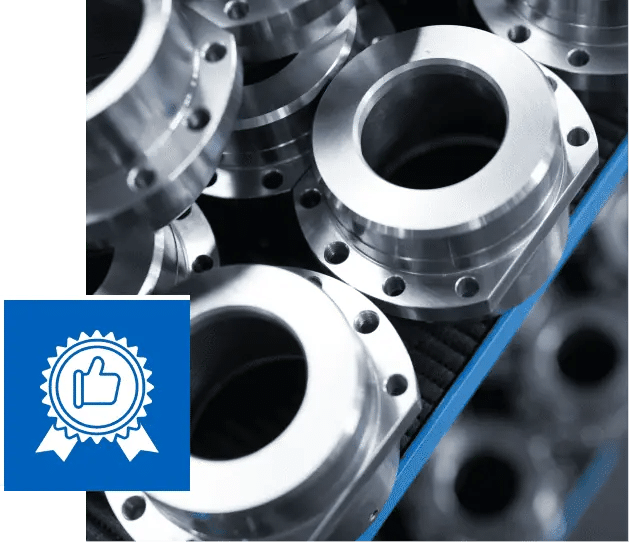
The ASME certification ensures the high quality and performance of Various small components that are used in industrial applications across the globe. The tested components that match the ASME standard are suitable for handling some of the most challenging jobs..
Established in 1880, ASME has grown as a cross-functional organization. Earlier, it was an engineering society, a source of training and education, a research and development authority, and an active nonprofit..
With members in 158 nations, ASME and its standards are multifaceted and worldwide.
The most recognized contribution of ASME is to develop and maintain diverse industry codes and standards. The main aim of ASME is to provide industry best practices that benefit users at all levels.
Several industries’ mechanical systems and components adhere to the standards developed by ASME for safety, dependability, and integrity.
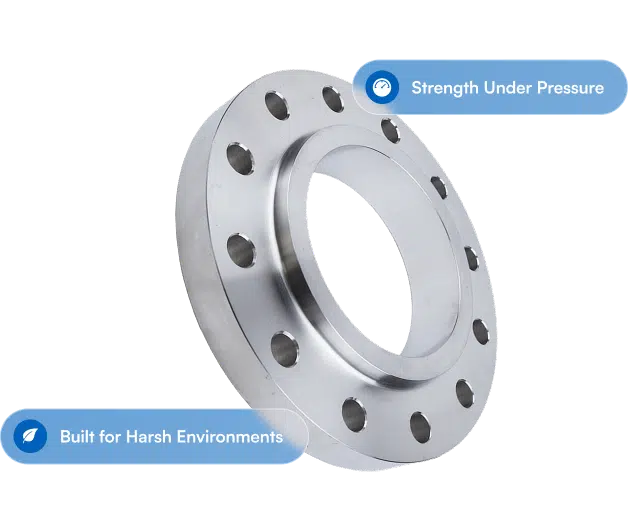
Additionally, ASME established guidelines, specifications, and regulations to codify flange design, manufacturing, and usage in various industrial applications.
ASME’s 600+ codes and guidelines cover everything from fasteners, elevators, plumbing fixtures, and pipelines, to power systems, boilers, and pressure vessels.
ASME- Certified Flange Types
For those looking for strength and top-notch performance in various industrial applications – Our ASME-certified flanges bolts are the definitive choice.
Slip-On Flanges
Slip-on flanges attach with a pipe by one or two filet welds, one outside and the other inside. A slip-on flange's internal diameter is larger than the connecting pipe's. Due to this, it slips onto the pipe.
Weld Neck Flanges
A weld neck flange is a tapered hub butt welded flange, which transfers pressure to the pipe flange dimensions, reducing the high-pressure concentration at the bottom of the flange.
Blind Flanges
Blind flanges help to seal the end of a pipe or a vessel, capping it off. They are helpful during maintenance or repair work on pipelines or equipment. They are also used to pressure test system parts before installation.
Lap Joint Flanges
The lap joint flanges system consists of a lap joint stub end and a backing lap joint flange. A Lap Joint Stub End is butt welded to a different pipe size (150 300 400 600), and a backing lap joint flange slides onto the pipe before welding the Stub End.
Threaded Flanges
It then “backs up” to create the seal with the stub end. Lap Joints are sometimes referred to as back-up or simply backing flanges for this reason.
Socket-Weld Flanges
Threaded Flanges connections might not be robust, so these flanges are best for lower-pressure environments and applicable on smaller pipes.
Discover High-Quality Flange Materials
Forged Materials With A Robust Connection With Premium Flange Materials!
Stainless Steel Flanges:
Carbon Steel Flanges:
Are you looking for premium material quality flanges? Texas Flange is a one-stop solution for your unique project requirements.
Due to stainless steel’s exceptional corrosion resistance properties, it has become one of the most preferred choices for ASME Class High-Quality Flange Materials.
Stainless Steel Flanges come in various grades like 304, 316, and 317 stainless steel, can be customized, and ensure specific environmental challenges. The also come in Low Carbon (IE, 304L) and High Carbon (IE, 316H)
Carbon Steel Flanges are suitable for extensive application in various industries such as oil and gas. In these industries, flanges’ durability and robustness are crucial.
These high-quality Carbon Steel Flange are affordable and come in different grades, including A105 and A350.

Alloy Steel Flanges:
Alloy steel flanges are crafted from chromium, molybdenum, and nickel. These ASME Class High-Quality Alloy Steel Flange Materials can tolerate high-temperature and high-pressure environments and are suitable for power generation and petrochemical industries.
Exotic Alloy Flanges:
Manufacturers make exotic alloy flanges from rare, specialized alloys like Inconel, Hastelloy, and Monel. These flanges are famous for their resistance to extreme temperatures and corrosive substances. ASME Class High-Quality Exotic Alloy Flange Materials are vital in the aerospace, chemical, and nuclear industries.
Industries We Serve
Discover How Our ASME Flanges Operate In Diverse Industries Worldwide.
Oil And Gas
Petrochemical Treatment And Processing
Power Generation
In the oil and gas industry, flanges that are certified by ASME ensure the smooth flow of liquid and gasses through pipes without leakage.
ASME flanges connect pipes and equipment in chemical processing/petrochemical plants, ensuring the efficient transport of sometimes hazardous chemicals and petroleum products.
ASME flanges are found in power plants connecting steam and water pipes, guaranteeing a secure flow of fluids in boilers, turbines, and condensers.

Industrial Pumps And Manufacturing Systems
ASME-certified flanges are utilized in manufacturing systems to connect pipes, pumps, and other equipment to prevent leakage and ensure safe and efficient operation.
Food And Beverage Processing
In the food and beverage industry, ASME-certified flanges connect pipes in production and processing lines, guaranteeing the hygienic and efficient transfer of liquids and gasses.
Large-Scale Pipe Systems And Waterworks
Municipal water supply systems and large-scale pipe networks for industries like mining and construction rely on ASME flanges, along with AWWA Flanges at times, to connect pipes and maintain the integrity of these extensive systems.

Heat Exchangers And Systems
ASME-certified flanges are vital components in heat exchangers, facilitating heat transfer between fluids.
Nuclear Power Plants
Nuclear power plants demand the utmost safety and precision. Flanges meeting ASME standards guarantee the smooth flow of coolant, steam, and other volatile fluids.
High-Volume Valves And Vessels
ASME-certified flanges are essential to connect large valves and vessels in various industrial processes, including chemical manufacturing, ensuring the integrity of high-pressure systems.

WHY CHOOSE US
Elevate Your Projects To Unparalleled Heights With Our ASME-Certified Flanges.