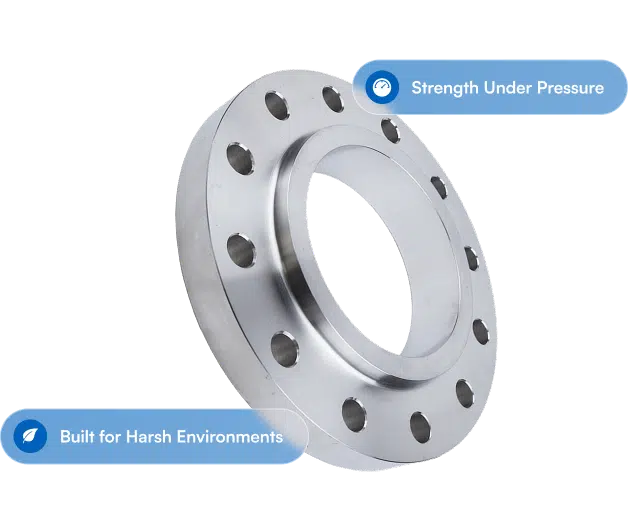
Petrochemical Flanges
Texas Petrochemical Flanges
Texas Flange serves several industries, with a significant portion of our customers operating in the petrochemical space. In the petrochemical and refinery industries, pipe flanges are used for almost all natural gas and crude oil applications. As trusted partners, we supply premium flanges and ensure the industry's success.
With a commitment to excellence, we ensure that our flanges and other fittings adhere to the latest industry standards. Petrochemical refineries employ diverse industrial flange types in distilling crude oil, petroleum gases, and various industry-used chemicals.
Are you from the petrochemical and refinery industries? Choose from a wide variety of our published flange specifications and elevate your industry standing with cutting edge projects. Now let's get into the details on petrochemical flanges and learn more.
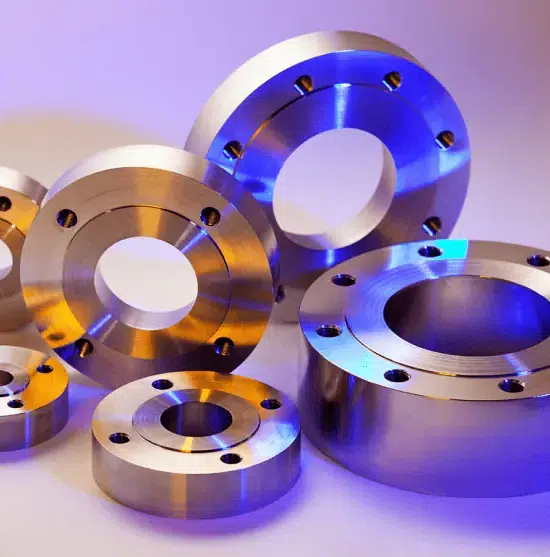
Petrochemical Importance
Overlooking the operational importance of pipe flanges' role in petrochemical refineries can be a huge mistake. They are vital to handling and moving of various natural resources, like natural gas, crude oil, and process chemicals. These modest but essential elements serve as the foundation of the petrochemical sector, enabling the smooth movement and exchange of these precious materials.
In the complicated world of petrochemical production, where dependability, safety, and efficiency are critical, pipe flanges are the savior. They facilitate simple maintenance and repairs while simultaneously guaranteeing the systems' integrity by maintaining a sturdy connection between pipes and other industrial equipment.
Did you know the petrochemical sector relies heavily on refineries, and that their continuous functioning depends on their reliability? Texas Flange delivers petrochemical flanges with quality and optimal performance outcomes. We devise flanges that are not just steel parts, but comprehensive solutions that precisely meet the petrochemical industry's needs.
Quality Standards
The petrochemical industry follows the American Society of Mechanical Engineers (ASME) and American National Standards Institute (ANSI) committees for guidelines and specifications. The ASME/ANSI B16.5 standard is widely accepted for various applications. Carbon, stainless, and alloy steels are frequently used for flanges.
Fueling Excellence: Setting The Gold Standard In Petrochemical Flanges!
additionally, the class ratings for pressure classes vary from 150 to 2500. Typical flange faces include ring-type joints (RTJ), flat-faced joints (FF), and raised-face joints (RF).
Key Flange Types
Flanges That Never Leak: Your Petrochemical Industry Key To Safety And Reliability
Texas Flange supplies the following flanges are considered the most commonly used throughout the petrochemical industry.
Weld Neck Flanges
Installing weld neck flanges is super easy. It requires welding pipe to the flange's neck. As a result, stress transfers from the flange to the pipe itself. Additionally, high-stress concentrations lessen near the hub's base.
Slip-On Flanges
Slip-on flanges offer a dependable solution in petrochemical facilities, where safety and structural integrity are paramount. They slide over the pipe ends and are firmly welded in place, providing a robust, leak-proof connection because their inner diameter is larger than the pipes.
Blind Flanges
Blind flanges are suitable to stop the flow at the end of a pressure vessel or piping system. They are employed to check gas or liquid flow via a vessel or pipe.
Diverse Standards
Premium Flanges: The Unrivaled Standard For Petrochemical Excellence
ANSI Flange Standards (American National Standards Institute)
The petrochemical sector extensively uses ANSI flange standards due to their dependability and compatibility. These standards specify the size, composition, and design requirements for several kinds of flanges, making them suitable for many applications. These specifications are also known and acknowledged world wide. ANSI flanges connect pipes and equipment to maintain structural integrity and reduce the possibility of leakage. Adhering to well established industry standard is essential for quality project work, and you can do that by selecting from any of the classes below:
ANSI B16.5 Class 150 Flanges
ANSI B16.5 Class 300 Flanges
ANSI B16.5 Class 400 Flanges (considered less popular today, as Class 600 is more common)
ANSI B16.5 Class 600 Flanges
ANSI B16.5 Class 900 Flanges
ANSI B16.5 Class 1500 Flanges
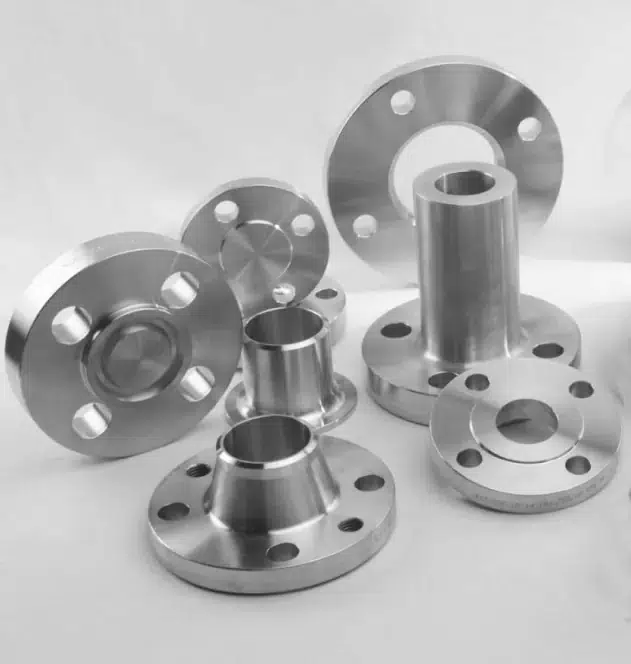
American Society Of Mechanical Engineers (ASME) Flange Standards
The American Society of Mechanical Engineers (ASME) flange standards are essential to designing and constructing flanges used in the petrochemical industry's high-pressure and high-temperature applications. ASME flanges are suitable for harsh situations because they meet strict criteria. These standards are frequently the best option when performance and safety are paramount. ASME B16.5 Flanges. ASME B16.47 Series A Flanges. ASME B16.47 Series B Flanges.
American Water Works Association (AWWA) Flange Standards
The American Water Works Association (AWWA) Flange Standards: AWWA flange standards are primarily used in water-related applications. However, they are also used in some petrochemical processes, particularly when water is involved, or when pressure is less of a concern than optimal flow. Because of their emphasis on robustness and resistance to corrosion, AWWA flanges are ideal for various industrial applications, including those in the petrochemical industry. AWWA C207 is the most commonly utilized subspec.
WHY CHOOSE US
Looking For Quality Flanges And Custom Steel Components? Well, You’ve Come To The Right Place: Texas Flange!
We have been in business for decades and have come across just about every different type of jobsite requirement. Our team is skilled at taking your inquiries and providing the right products for your applications.
Here at Texas Flange, we genuinely care about providing you with the ideal products. In this industry, we realize all too well that nothing is more important than getting your project functioning in a timely manner.
When you choose Texas Flange, you're selecting the industry leader. Our flanges have been shipped worldwide, and we're confident you'll be pleased with them. Reach out to us today to get the solutions you need for your projects!