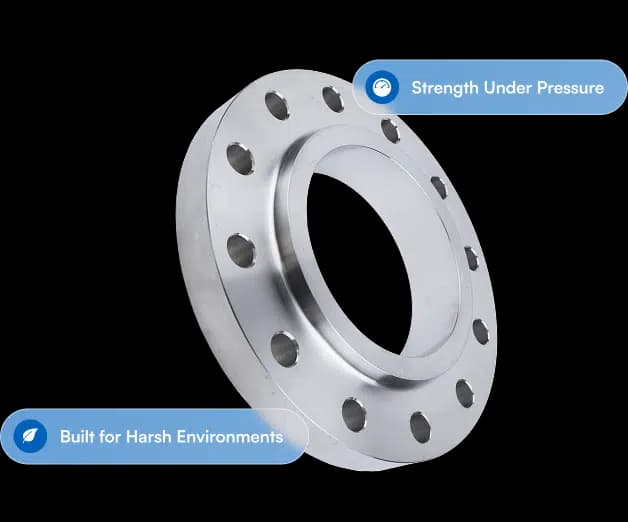
What Is ASME B16.47?
ASME B16.47 is the standard covering large diameter flanges, typically defined as nominal pipe sizes from 26 inches and above, though the practical cutoff is usually around 20+ inches where ASME B16.5 becomes impractical. ASME B16.47 covers weld neck, slip-on, blind, and other flange types in large sizes, and is organized into two distinct series: Series A and Series B. Both series cover the same pressure classes (Class 75, 150, 300, 400, 600, 900) but approach the design problem differently.
The historical context is important. ASME B16.5 defines flanges for nominal pipe sizes up to 24 inches, and includes pressure classes up to 2500. For larger sizes, the B16.5 approach of rigidly defined dimensions becomes impractical because many combinations of size and pressure class are rarely manufactured. Manufacturers told ASME that custom engineering every non-standard combination was inefficient. The result was B16.47, which provides more design flexibility while maintaining safety and compatibility.
Series A Flanges
Series A flanges are optimized for minimum outside diameter and weight. For a given bore size and pressure class, a Series A flange is significantly smaller and lighter than the equivalent Series B flange. This design philosophy makes Series A attractive for applications where space is constrained, weight is critical (such as elevated piping or outdoor structures), or where the installation is congested with nearby equipment and structural members. A 36-inch Series A flange might have an outside diameter around 45 inches, whereas the same size in Series B could exceed 50 inches.
The tradeoff is that Series A flanges operate with lower design margins. They're designed to the minimum thickness and material required to meet the specified pressure and temperature ratings. This doesn't mean Series A flanges are unsafe or inferior, but rather that they're optimized for efficiency. Series A is appropriate when the design has been carefully engineered and the loads are well understood. Series A flanges are common in newer installations designed by professional engineers who optimized the flange selection for their specific constraints.
Series B Flanges
Series B flanges are heavier with larger outside diameters than Series A for equivalent pressure classes. The design philosophy emphasizes robustness and conservative engineering margins. A Series B flange has more material throughout, thicker walls, and larger bolt circles. For the same 36-inch bore and pressure class, Series B provides a more robust product with greater safety margin and tolerance to operational stresses.
Series B is attractive in applications where the installation loads are not precisely known, where the system may see unexpected stresses, or where the facility will operate for decades with minimal modifications. Many existing industrial facilities use Series B because older design practices preferred conservative, over-engineered equipment. Series B is also common in applications with severe environments like elevated temperature service, cyclic loading, or challenging maintenance access where reliability takes precedence over weight and size optimization.
Key Differences Between Series A and Series B
Beyond size and weight, Series A and Series B differ in their wall thickness, bolt circle diameter, and bolt size. For an equivalent nominal pipe size and pressure class, Series B has significantly thicker flange faces, larger overall diameters, and uses larger bolts on a larger bolt circle. These differences affect the flange's moment of inertia and its ability to distribute loads across the joint.
The mechanical properties required are the same for both series, and both are manufactured from equivalent materials like ASTM A105 or ASTM A182. The material cost is similar, but the manufacturing cost is actually lower for Series A because less material is removed during machining. However, handling and shipping large flanges is more expensive, so the size difference has economic implications beyond the material itself. Bolt costs are higher for Series B because larger bolts are required, and fastener costs scale with size.
When to Choose Each Series
Choose Series A when your installation is space-constrained, weight is a concern, or when professional engineering has optimized the design for efficiency. Retrofit projects in congested areas, offshore platforms, or elevated structures often specify Series A because the space savings are significant. New installations designed with CAD models and professional engineering typically use Series A because the engineer designs to the minimum requirements.
Choose Series B when you want maximum design margin and robustness, or when the application will span decades with minimal re-engineering. Older facilities commonly standardize on Series B across all large flange installations for consistency and because spare parts are interchangeable. Some industries prefer Series B by default for high-reliability applications where the cost premium is acceptable insurance against unexpected loads or environmental factors. When in doubt and you're not sure which series was originally specified, request documentation from the original engineer or facility owner.