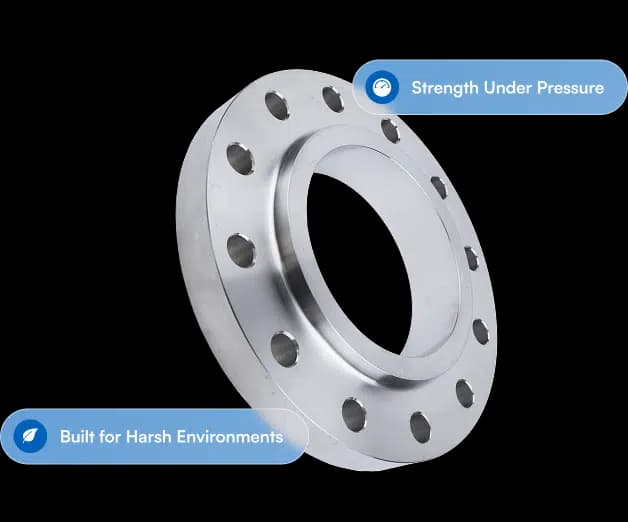
The Major PVF Standards
The world's major pressure vessel and flange (PVF) standards are ASME in North America, PED in Europe, API in the oil and gas sector, and ISO internationally. Each standard has its own history, design philosophy, and regulatory context. ASME (American Society of Mechanical Engineers) standards, particularly ASME B31 piping codes and B16 flange specifications, dominate in the United States and are widely respected globally. PED (Pressure Equipment Directive) is a European Union requirement that establishes minimum safety standards for pressure equipment sold or used in EU member countries. API standards from the American Petroleum Institute are widely used in oil and gas applications worldwide, even outside the United States.
ISO standards, such as ISO 6162 for flange connections, attempt to create international consensus standards compatible with multiple regional standards. The reality is complex: a single flange might be designed to meet ASME B16.5, be PED certified, and also comply with API 6A requirements simultaneously if it's intended for global markets. Understanding the distinctions between these standards helps clarify which regulations apply to your project and which standard offers the best safety margin for your application.
ASME vs PED Requirements
ASME standards are prescriptive and specify exact dimensions, materials, and test requirements. ASME B16.5, for example, provides tables with specific dimensions for each size and pressure class, exact material specifications with chemical composition and mechanical property ranges, and mandatory hydrostatic test requirements before shipment. The standard assumes American manufacturing practices and supply chains are available.
PED is more performance-based and outcome-focused. Rather than specifying exact bore diameters or test pressures, PED requires that equipment be designed and manufactured such that it doesn't pose risks of accident due to pressure. This gives manufacturers more design flexibility but requires comprehensive risk assessment documentation. PED requires CE marking and third-party certification (Module C or full Module D depending on the pressure and size category) of the quality system. A flange manufacturer selling into the EU must prove through documented risk assessment that their products meet PED requirements. PED also explicitly addresses hazardous materials exposure and environmental considerations beyond the mechanical aspects.
API Standards and Where They Apply
API standards developed from decades of oil and gas industry experience and focus on reliability in extreme conditions. API 6A covers drilling, production, and wellhead equipment used in oil and gas wells and is widely used in subsea, offshore, and high-pressure applications. API 579 addresses fitness-for-service assessment of pressure equipment that may have degraded in service. API standards are less rigid about exact dimensions than ASME and instead provide ranges with performance-based acceptance criteria.
API standards often include additional requirements around traceability, documentation, and quality management that exceed ASME requirements. Many multinational oil and gas companies mandate API compliance in their specifications because of the standard's comprehensive safety focus. If you're working in oil and gas applications, your customer almost certainly specifies API compliance. However, in other industries like chemical processing, municipal water systems, or HVAC, API standards are less relevant. The key is knowing your customer's requirements and whether your project falls into the oil and gas domain.
ISO and International Compliance
ISO standards attempt to bridge regional differences and create globally compatible specifications. ISO 6162 specifies flanges for hydraulic fluid power systems. ISO 7241 covers quick-disconnect couplings for hydraulic systems. These ISO standards are most relevant in industries like mobile equipment, hydraulics, and automation. For general industrial piping, ISO presence is less prominent than ASME or API. However, companies operating globally often use ISO standards as a baseline that complies with multiple regional requirements.
The ISO approach often represents a compromise between ASME prescriptiveness and PED flexibility, making ISO-compliant products more easily tradeable across regions. Some multinational flange manufacturers design and certify products to meet ASME, PED, and ISO requirements simultaneously, minimizing their manufacturing complexity while serving diverse markets. If your application might eventually be exported or used internationally, specifying ISO compliance where applicable provides future flexibility.
Choosing the Right Standard for Your Project
The correct standard for your project depends on geography, industry, and customer requirements. If you're in North America and specify ASME-compliant flanges, you're safe for domestic applications. If you're selling into Europe, PED compliance is mandatory. If you're in oil and gas globally, API standards are nearly always required. The safest approach is to verify your customer's requirements in writing before beginning procurement. Your customer might have a specification sheet that explicitly states 'ASME B16.5 Class 300' or 'PED Category III,' removing guesswork.
When choosing a flange supplier like Flanges.AI, verify that they can certify compliance with your required standard. This means reviewing test reports, material certificates, and third-party certifications as appropriate. Don't assume a flange that meets ASME also meets PED, or vice versa. Finally, if your project might transition between jurisdictions or use standards in the future, consult your flange engineer about multi-standard compliance. The cost of obtaining dual or triple certification during manufacturing is far lower than discovering non-compliance mid-project.