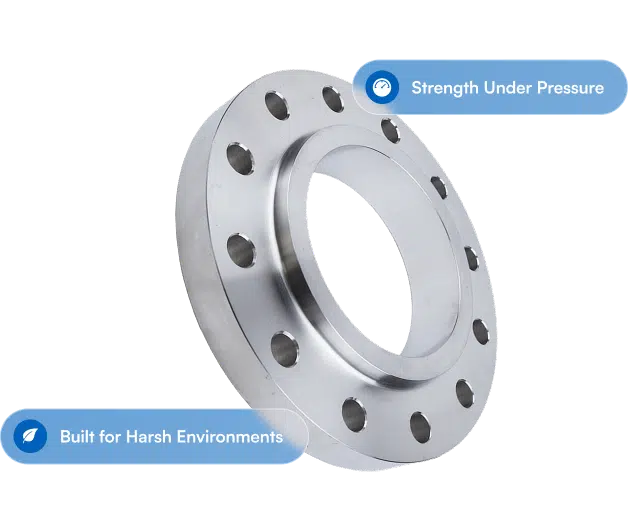
Selecting the best AWWA flange is vital for any project, especially those dealing with water works or industries. C207 and C228 are two flange standards offered by AWWA, and while they may appear similar, they have different needs.
AWWA C207 is appropriate for general water systems; however, AWWA C228 is suitable for corrosion areas. Getting to know the pros and cons of each type can assist you in making the right decision regarding your project. This guide will explain the basic considerations for determining whether AWWA C207 or C228 flanges are suitable for your project.

Overview of AWWA C207 flanges
-
Definition
AWWA C207 applies to parts manufactured from strong metal. These parts are best for systems dealing with water. They are vital in connecting pipes, valves, and other related equipment. C207 parts are present in areas where clean water is present. They are present in the pipes that transport water over long distances.
-
Benefits
A primary advantage of AWWA C207 flanges is their superior strength. The metal used is solid, and it can withstand pressure. This makes it very suitable for systems that require high reliability. One of the greatest benefits of this type of promotion is that they are more affordable. These metal parts are cheaper than others. They are relatively inexpensive for their type of user.
Using AWWA C207 parts can be cost-effective for water systems. They are in many areas, such as water-cleaning plants and pipelines. This makes them strong, affordable, and a good choice within the construction industry.
Overview of AWWA C228 flanges
-
Definition
AWWA C228 is a specification concerning the flanges produced from stainless steel and other materials. These flanges are available for use in demanding environments. They are suitable for areas where rust is a major issue.
-
Applications
The primary application for AWWA C228 flanges is in joining pipes, valves, and other accessories in waterworks and industrial applications. These flanges are ideal for locations that deal with hostile chemicals, salt water, and high or low temperatures. Due to their resistance to rust, they are ideal for every project that may need long-term solutions.
-
Benefits
AWWA C228 flanges are strong and are present in various structures. They are present in industries such as water treatment, chemical and petrochemical industries, and the marine industry. They are strong and can stand many impacts that make them usable for many years.
AWWA C228 flanges offer excellent protection against corrosion and other harsh conditions. They ensure the longevity of your systems and reduce the need for frequent maintenance. If you need a strong, corrosion-resistant flange, AWWA C228 is the right choice.
Key Differences Between AWWA C207 and C228
When choosing the right flange for your project, understanding the differences between AWWA C207 and C228 is essential. Both standards are popular in waterworks and industrial applications. However, they have distinct differences. These differences impact their suitability for various environments and budgets. Let’s explore the key areas: material composition, durability, and cost considerations.
Selecting the most appropriate flange for your pipe system requires a basic knowledge of AWWA C207 and C228 flanges. These two standards are widely present in waterworks and industries. But they contain some differences. These differences affect their adaptability to various locations and budgets. Let’s explore the key areas: construction materials used, the ability of the building to withstand environmental factors, and the costs involved.
Material Composition
-
AWWA C207
AWWA C207 flanges are prepared from carbon steel. Carbon steel is also relatively stiff and possesses relatively high mechanical strength. They have their usual application in waterworks projects. It is suitable for conditions that do not require highly corrosive substances. Carbon steel flanges possess impressive strength characteristics. These are durable and can stand the rigors of wear and tear. However, they are not as corrosion-resistant as other material types.
-
AWWA C228
On the other hand, AWWA C228 flanges comprise stainless steel or other alloy materials. Stainless steel is quite famous for its ability to withstand corrosion. It is an ideal working environment with many chemicals or high moisture content risk. C228 flanges may use alloys such as nickel or chromium as part of the flange materials. These materials further improve the flange’s characteristic of resisting corrosion together with high-temperature conditions.
Comparison
The only major difference between standard and standard is the kind of materials used. C207 is a strong carbon steel but not very durable due to its low corrosion threshold. C228 – Stainless steel and alloys are resistant to corrosion. This makes C228 flanges ideal for use in more hostile situations. Where a project requires the use of aggressive chemicals or high temperatures, C228 becomes advisable to use. However, if corrosion resistance is not a concern, C207 offers a cost-effective and strong option.
Durability
-
AWWA C207
Carbon steel, which is present in the AWWA C207 flanges, is strong and resistant. They can bear a lot of pressure and stress. Instead, it is a rather durable material that is poor in corrosive conditions. However, constant exposure to moisture or chemicals will likely lead to rusting. This shortens the life of the flange and diminishes its performance. Under non-corrosive conditions, flanges made from C207 can serve for several years without complications.
-
AWWA C228
AWWA C228 flanges, readily available in stainless steel or alloys, are highly durable, especially in extreme environments. Stainless steel ordinarily has a high level of resistance to rust and corrosion. This makes the C228 flanges suitable for application in areas that are in constant exposure to water, chemicals, or high heat. The materials that makeup C228 flanges are alloys that make them even more durable. These flanges are more reliable and will not crack or fail under pressure.
Comparison
Regarding the durability aspect, the environment is extremely influential in determining which flange type is ideal. For a situation where your project is in a non-corrosive environment, the AWWA C207 flanges offer stability, reliability, and affordability. However, where projects involve corrosive atmospheres, the AWWA C228 flanges will prove to have a longer service life. The corrosion resistance of these flanges assures consumers that their stainless steel flanges will not require constant replacement.
Cost Considerations
-
AWWA C207
C207 flanges are cheaper than C228 flanges. In general, AWWA C207 flanges may be slightly cheaper than AWWA C228 flanges. It is cost-effective to produce carbon steel. It also makes the flanges of C207 cheaper than the various other projects. Depending on the cost factor and environment, where corrosion is not severe, C207 flanges can be a good choice. The lower initial cost can be a significant advantage for large projects.
-
AWWA C228
AWWA C228 flanges use stainless steel or alloys, which is relatively expensive. The higher cost is due to the materials used. Stainless steel and specialty alloys are generally more expensive to manufacture. However, with this initial cost, there are other benefits, such as a longer lifespan and less frequent replacement requirements. When exposed to corrosive conditions, it is more economical to use C228 flanges since they require less replacement and maintenance.
Comparison
There is a big difference in cost between AWWA C207 and C228 flanges. C207 flanges are cheaper than the others and, hence, would be ideal for projects that require affordable materials. However, in corrosive environments, the higher costs of C228 flanges can be balanced by a more significant life cycle and overall maintenance cost savings. While deciding on which of these standards to use, it is necessary to consider the first cost and the additional costs.
How to Choose the Right Flange
It is also essential that you select the right flange for your project based on the specifications of your application. Flanges join pipes, sockets, valves, pumps, and other structures. They must be long-lasting, safe, and appropriate for your project’s climate. This is how you choose the correct flange depending on the project’s requirements, conditions, and costs.
-
Assessing Project Needs
The first step in selecting the right flange is understanding your project’s specific requirements. Here are key points to consider:
- Type of Fluid or Gas: The flange material has to be suitable for the type of fluid or any gaseous substance that will be transported by the system. For example, corrosive fluids will need flanges of stainless steel, while non-corrosive fluids will require carbon steel flanges.
- Pressure and Temperature: The flange must resist the system pressure and temperatures. In high-pressure systems, the flanges used must be of a higher pressure class. Likewise, high-temperature systems require flanges made of materials that can withstand heat.
- Connection Type: Identify if you require a welded, threaded, or bolted joint. Welded flanges provide some of the tightest seals while extremely durable but labor-intensive. Threaded and bolted connections are of lower tensile strength but are easier to fit than welded.
- Industry Standards: See that the flange conforms to present standards like AWWA, ANSI, or ASME. Adherence to these standards ensures that the flange is safe and of the required quality.
- Project Timeline: Think about how soon you will require the flanges. It is also important to note that depending on the type of flange and the material used, some may take longer to produce. In cases where you are under pressure with time, this could be the best option for your project.
When evaluating your project requirements, filtering out choices and target flanges suitable for your application becomes easier.
-
Environmental Factors
The environment where the flange gets used is crucial in making the right choice. Different environments require different materials and coatings. Here’s what to consider:
- Corrosion: Corrosion: If the flange gets subjected to a corrosive environment like seawater, chemicals, or other fumes, consider a corrosion-resistant material, including a stainless steel flange or a flange with a corrosion-resistant coating. Flanges experience corrosive damages, which cause leaks or failure within a certain period.
- Temperature Fluctuations: Where there are drastic temperature variations, there must be flanges capable of expanding and contracting but not opening up. Due to their strength and flexibility, such conditions make stainless steel flanges suitable for such applications.
- Weather Conditions: Weather conditions like rain, snow, or direct sunlight affect structures that are present outdoors. Make sure that the material of the flange can withstand such elements. Coated or galvanized flanges would have better protection.
- Vibration and Movement: In environments where there is a lot of vibration or movement, such as in a manufacturing plant, select flanges designed to handle these conditions. Loose or damaged flanges in such environments can lead to leaks and system failures.
Considering environmental factors helps you select flanges that will last longer and perform good even in harsh conditions.
-
Budget Considerations
Your budget plays a significant role in flange selection. However, it’s important to balance cost with quality and performance. Here’s how to navigate this:
- Material Costs: Different materials come at different price points. Carbon steel flanges are generally more affordable, while stainless steel or alloy flanges may be more expensive. Consider the long-term cost benefits of using a more durable material.
- Maintenance Costs: Lower flanges could be more demanding in terms of maintenance or get replaced more frequently. A high-quality flange can significantly lower the cost of maintenance in the future and minimize possible downtimes.
- Lifecycle Costs: Flange selection should not only be based on the cost of purchasing it but on the cost of using it in the long run. A more costly flange that will be durable and will not demand frequent maintenance may be cheaper in the long run.
- Bulk Purchasing: Sometimes, if the required flanges are large, you can find a way to bargain with the supplier. This way, the total cost for the flange can be reduced, hence bringing down the cost per flange.
- Project Funding: Think through the potential funding sources for your project. They should not compromise on quality and safety for cost reduction.
You should always take into consideration your budget, the needs of your project, and the environment in order to select the best flange.
Conclusion
When choosing between AWWA C207 and C228 flanges, think about what your project needs. C207 flanges are strong and cost-effective, making them good for regular water systems. On the other hand, C228 flanges resist rust well, making them better for tough environments. Each type has its own benefits, but the best choice depends on what you need. If you’re not sure which AWWA flange is right for you, Texas Flange is here to help. Get in touch with us today for advice and the right flange for your job.
FAQs
- What is the main difference between AWWA C207 and C228 flanges?
AWWA C207 flanges comprise carbon steel that can be used widely in waterworks. AWWA C228 flanges comprise stainless or other alloys that are appropriate in highly corrosive areas. Select depending on the requirements of your particular assignment or project.
- When should I use AWWA C207 flanges?
Use AWWA C207 flanges for standard waterworks work. They are very resilient and have proven profitable in constructing pipes and water treatment plants. They are suitable for applications where corrosion is not a serious problem.
- Why are AWWA C228 flanges more expensive?
AWWA C228 flanges are relatively costly since they get ready from stainless steel or other alloys. Such materials provide enhanced protection against corrosion and are more durable than the earlier materials. They are suitable for use in areas that are tough or have a lot of chemicals around them.
Related reading: For the full walkthrough on selecting the right flange across material, pressure class, and standards, see our flange selection guide.