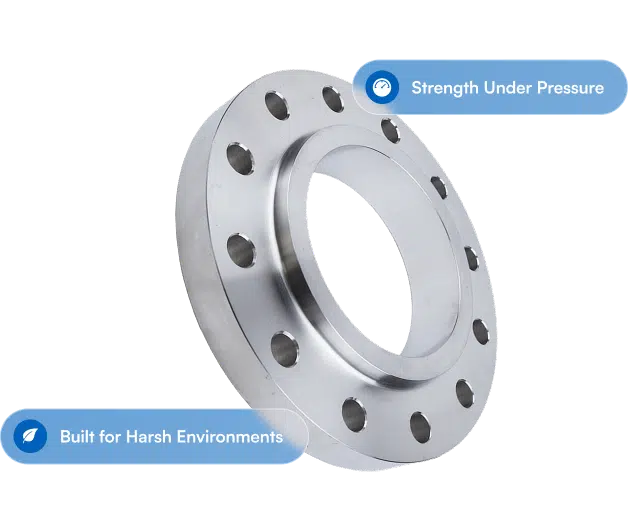
Flanges are connectors that connect the pipeline systems, valves, pumps, gaskets, and other equipment. They make sure that the industrial system flows in perfect conjunction and does not require any additional mechanics to help the smooth flow. Blind flanges and slip-on flanges are both common in industrial settings.
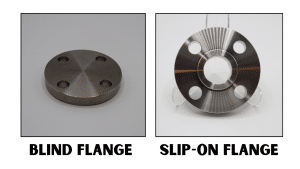
Understanding these two and drawing a comparison between them can help you choose the most appropriate flange as per your requirements and industrial needs.
Understanding Blind Flanges
Blind flanges are close-ended flanges that fit into the end of a pipeline to terminate the flow. They provide a leak-proof seal and help in stopping the flow of fluid or gasses in the pipeline system. They have a higher flange weight and flange wall thickness as compared to others because they are solid, which also makes them require additional support.
Blind flanges are a good choice for high-pressure settings because they provide a robust and sturdy adjustment when closing a pipe off. They are also easier to maintain and manage in case of repair and fixation from time to time.
Understanding Slip-On Flanges
Slip-on flanges, as the name suggests, can slip over the pipe and one can weld it into place by adjusting it properly. They are usually fillet-welded both on the inside and outside to ensure a secure connection.
Slip-on flanges connect two or more pipes together, and connect valves, pumps, gaskets, and other equipment. They are mostly suitable for low to medium-pressure environments and require tight and leakproof welding to prevent any leaks or maladjustments. They are also easy to remove and assemble in case of maintenance and repair and are even cost-effective as compared to other flanges.
Comparing Blind Flanges and Slip-On Flanges
When choosing between blind flanges and slip-on flanges, it is best to know their mechanisms, functionality, uses, features, and convenience before making a choice.
Here are the top 5 considerations that differentiate the two:
1) Functionality
Blind flanges: Blind flanges close off the end of pipeline systems. They terminate the flow of any kind of fluid or gas that flows inside the pipelines, making sure that there is no leak or any potential for hazards or accidents.
Slip-on flanges: In contrast, slip-on flanges are connectors that form a connection or a joint between two or more pipes or valves. They help in transferring the fluid or gas from one pipeline to the other, ensuring smooth flow throughout the industrial system.
2) Installation
Blind flanges: Installing blind flanges is relatively easier due to their usage. Blind flanges come at the end of a pipeline and one needs to bolt it to the end to ensure a leak-proof seal and complete termination of the flow of fluid or gas in the pipelines.
Slip-on flanges: These flanges, on the other hand, are comparably difficult to install as they connect two or more pipes to each other. One has to slip it onto the pipeline and weld it in place so that it remains fixated and provides a leak-proof connection between different pipes.
3) Pressure and temperature
Blind flanges: Blind flanges are solid in design and robust in nature. They are comparatively heavier and close off the ends of pipelines. They are, henceforth, more suitable for high-pressure and high-temperature industrial settings.
Slip-on flanges: Slip-on flanges are not ideal for high-pressure and high-temperature industrial settings. They are usually better suited to low to medium-pressure settings, like low-pressure water systems, that do not require heavy or robust settings.
4) Maintenance
Blind flanges: Relatively easier to maintain, blind flanges come with a straightforward installation system. One can easily remove them without any additional mechanical requirement or support.
Slip-on flanges: Slip-on flanges, on the other hand, require more support and additional management. Since they are connecting pipes, one needs to weld them in place. This is also why their assemblage and disassemblage require a little more effort.
5) Expense
Blind flanges: Blind flanges are comparatively more expensive and require more spending. They are heavier, solid, and suitable for high-pressure and high-temperature settings, which naturally adds more to the cost.
Slip-on flanges: Slip-on flanges are more affordable and less heavy on the pocket. They are suitable for low to medium pressure and temperature settings, which allows it to have less cost and relatively less expenditure.
Choosing the Right Flange for Your Industry
It is important to consider a lot of factors before choosing the type of flange for your industry so that you can make an informed decision. From performance to safety, everything adds to important considerations.
Here are the 3 key factors that you should keep in mind:
1) Application Requirements
Choosing the type of flange out of the two also depends on how you want to use it. If you need to close off the end of the pipeline and need ease of maintenance along with a leak-proof setting, go for a blind flange.
On the other hand, if you require flanges to connect pipes and other kinds of equipment, you should choose a slip-on flange.
2) Pressure and Temperature Ratings
For a high-pressure and high-temperature industrial requirement, it is best to go for a blind flange as they are made of robust material and have a higher flange weight and flange thickness.
On the other hand, if your industrial requirement is for low to medium pressure and temperature settings, you do not require a blind flange. Instead, you can go for a slip-on flange and connect your pipes.
3) Safety and Reliability
Safety and reliability is an important consideration when it comes to industrial requirements. Ensuring safety and reliability is a crucial factor and depends upon the flange material, flange specifications, as well as functionality of the flanges.
Make sure that the material of the flange as well as its usage is perfect for your industrial requirement and adjusts well with the industrial system, ensuring smooth and leak-proof flow.
Conclusion
To choose the right flange for your product, you need to carefully look at the needs of your piping system, such as the pressure, temperature, upkeep requirements, and cost. Slip-on flanges and blind flanges each have their own benefits and can be used for different tasks.
By learning about the functions, pros, and cons of each type of flange and thinking about what your system actually needs, you can make an informed choice that will keep your pipe system safe, efficient, and long-lasting
Related reading: For the full decision framework on flange selection (material, pressure class, face type, and standards), see our flange selection guide.