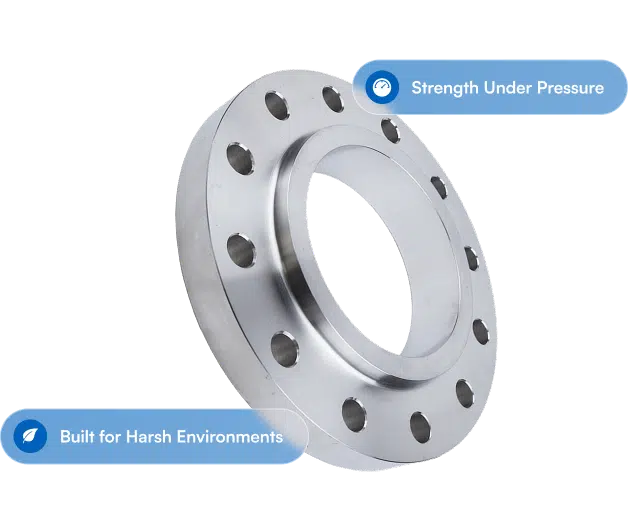
Flanges provide structural integrity and ensure a leak-free connection in industries such as oil and gas, chemical processing, and power generation.
However, when it comes to choosing between bolted and welded flanges, reliability is a key concern. Both types of connection offer advantages and disadvantages, but which is the most reliable between bolted vs. welded flanges?
Understanding bolted flanges
Bolted flanges (blind, welding neck, socket weld, slip-on, threaded, lap joint, orifice, and expander flanges.) are designed to be joined together using bolts and gaskets. The primary purpose of the bolts is to create sufficient clamping force, ensuring a secure and leak-proof seal. These flanges are commonly used in applications where disassembly and maintenance are necessary.
Advantages of bolted flanges:
- Ease of maintenance: Bolted flanges can be easily dismantled, making repairs and replacements more convenient without cutting the pipe or disrupting the system.
- Flexibility: These flanges allow for adjustments, realignment, and expansion of piping systems as required.
- No need for welding: Since bolted connections do not require welding, they eliminate the risks associated with heat-affected zones and welding defects.
Disadvantages of bolted flanges:
- Potential for leaks: The use of gaskets and multiple fastening points creates potential leak paths, especially if the bolts are improperly tightened or the gasket deteriorates over time.
- Regular maintenance required: Due to thermal expansion, vibration, and pressure changes, bolted flanges require periodic tightening and inspection.
- Space considerations: The presence of bolts and nuts increases the required space for installation and maintenance.
Understanding welded flanges
Welded flanges (weld neck, slip-on, blind, socket weld, and lap joint) are permanently attached to the pipe through a welding process. This creates a strong and durable connection, making them ideal for high-pressure and high-temperature applications.
Advantages of welded flanges:
- Enhanced strength and integrity: Welding creates a seamless joint that reduces the likelihood of leaks, making it a preferred choice for critical systems.
- Lower maintenance needs: Since there are no bolts or gaskets involved, welded flanges require less maintenance over time.
- Better performance in harsh conditions: Welded flanges withstand high pressures, extreme temperatures, and corrosive environments more effectively than bolted connections.
Disadvantages of welded flanges:
- Permanent connection: Once welded, these flanges cannot be easily removed or replaced, requiring extensive work for modifications or repairs.
- Welding-related defects: Poor welding techniques can introduce defects such as porosity, cracks, and weak joints, which can compromise reliability.
- Higher installation costs: The need for skilled welders and specialized equipment increases the initial cost and installation time.
Reliability comparison: Bolted vs. welded flanges
When determining which connection type is more reliable between Bolted vs. Welded flanges, several factors must be considered, including operating conditions, maintenance requirements, and the risk of leaks.
- Leak prevention: Welded flanges have an advantage in leak prevention since they eliminate gasket-related issues. However, proper bolt tightening techniques and high-quality gaskets can make bolted flanges equally reliable.
- Durability in harsh environments: Welded flanges generally perform better in extreme conditions due to their seamless design and resistance to temperature and pressure fluctuations.
- Ease of inspection and maintenance: Bolted flanges provide a major advantage when it comes to maintenance and repairs. They allow for quick disassembly, whereas welded flanges require extensive work for modifications or replacements.
- Cost and installation time: Bolted flanges typically have lower initial costs and quicker installation, whereas welded flanges require specialized welding procedures that increase costs and time investment.
Which flange type is more reliable?
The reliability of a flange connection depends on the specific application and requirements of the system. If leak prevention and strength are top priorities, welded flanges offer superior performance, especially in high-pressure environments.
However, if flexibility, ease of maintenance, and cost-effectiveness are more critical, bolted flanges provide a practical solution.
Choosing the right flange for your needs
Both bolted and welded flanges have their place in industrial applications. While welded flanges provide unmatched strength and durability, bolted flanges offer flexibility and ease of maintenance. The decision of Bolted vs. Welded flanges ultimately depends on factors such as operating conditions, maintenance capabilities, and long-term cost considerations.
If you are looking for high-quality flanges for your industrial applications, Texas Flange offers a comprehensive selection of Bolted vs. Welded flanges designed for durability and reliability. Explore our range of products and find the perfect solution for your piping system today!
FAQ’s
What is the difference between Bolted and Welded Flanges?
Bolted flanges use bolts to connect two parts, providing a removable and adjustable connection. Welded flanges are permanently attached to pipes using welding, offering a stronger, leak-proof seal.
When should I use Bolted flanges over Welded flanges?
Bolted flanges are ideal for systems that require frequent maintenance or disassembly. Welded flanges are used for high-pressure, high-temperature applications where a permanent, secure connection is needed.