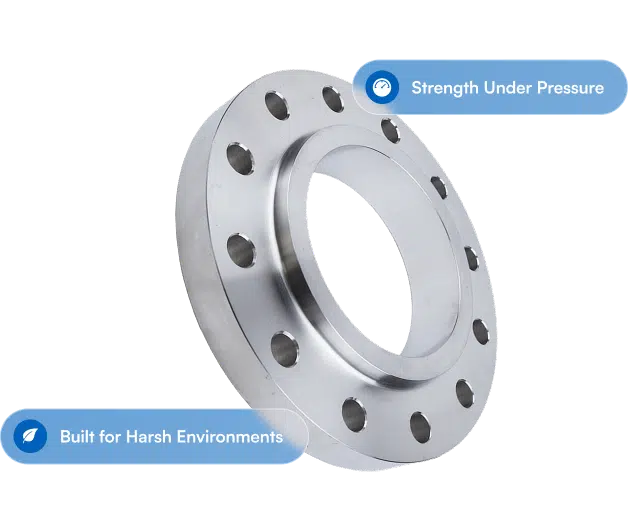
When selecting a flange, one of the most critical considerations is its pressure class. You need to know what is the difference between Class 150 flange and Class 300 flange; which differ in strength, pressure ratings, and applications. Understanding these you can help ensure the right selection for a given project.
Understanding flange classes
Flange classes are assigned based on the pressure-temperature ratings established by the American National Standards Institute (ANSI) and the American Society of Mechanical Engineers (ASME). These ratings indicate the maximum pressure a flange can withstand at a given temperature. The higher the class number, the greater the pressure the flange can handle.
Class 150 and Class 300 flanges are two of the most widely used ratings, especially in industrial and commercial applications. While both classes serve similar functions, they have distinct differences in strength and application.
Strength differences: Class 150 vs. Class 300
The primary difference between Class 150 and Class 300 flanges is their pressure-handling capacity. Class 300 flanges are designed to withstand significantly higher pressures than Class 150 flanges. This difference is due to the following factors:
- Wall Thickness: Class 300 flanges have a thicker wall than Class 150 flanges, allowing them to endure higher internal pressures.
- Bolt Circle and Bolt Size: Class 300 flanges have a larger bolt circle diameter and use larger bolts, which enhance their strength and sealing capability.
- Gasket Seating Surface: The increased surface area for gasket contact in Class 300 flanges improves sealing performance under higher pressure conditions.
- Material Strength: While both flange classes may be made from similar materials such as carbon steel, stainless steel, or alloy steel, Class 300 flanges undergo additional design enhancements to improve their structural integrity.
For example, a standard Class 150 flange made from ASTM A105 carbon steel has a pressure rating of approximately 285 psi at 100°F, while a Class 300 flange of the same material can handle about 740 psi at the same temperature. This increased pressure capacity makes Class 300 flanges more suitable for demanding applications.
Application differences: Where each flange is used
Choosing between a Class 150 and a Class 300 flange depends on the specific application requirements, including the pressure, temperature, and type of fluid being transported.
Class 150 Flange Applications
Class 150 flanges are commonly used in low-pressure and moderate-temperature applications. Typical industries and use cases include:
- Water Treatment Plants: Ideal for water distribution systems where pressure demands are relatively low.
- HVAC Systems: Used in heating and cooling pipelines where extreme pressure is not a concern.
- Food and Beverage Industry: Suitable for non-corrosive and moderate-pressure piping systems.
- Oil and Gas Pipelines (Low-Pressure Sections): Applied in non-critical areas where pressure remains below 285 psi.
Class 300 Flange Applications
Class 300 flanges are used in higher-pressure and higher-temperature environments, such as:
- Petrochemical and Refining Facilities: Essential for handling high-pressure steam, gases, and corrosive fluids.
- Power Plants: Used in high-pressure steam and boiler feed systems.
- Industrial Process Piping: Suitable for chemical processing plants that require durable and secure connections.
- High-Pressure Oil and Gas Systems: Applied in pipelines transporting high-pressure crude oil, natural gas, and other energy products.
In general, industries requiring greater durability and safety under high-pressure conditions prefer Class 300 flanges, as they provide better sealing and resistance to leakage.
Choosing the right flange for your needs
When deciding between Class 150 and Class 300 flanges, it is essential to evaluate key factors such as:
- Ensure the selected flange meets the specific pressure and temperature conditions of the system.
- Consider the type of fluid being transported and the material of the flange to avoid corrosion or chemical reactions.
- Follow relevant ANSI/ASME standards to ensure compliance with industry requirements.
- Investing in a higher-class flange may increase upfront costs but provide better long-term reliability and safety.
Selecting quality flanges from Texas Flange
you need Class 150 or Class 300 flanges, selecting high-quality, durable, and properly rated components is essential for ensuring a safe and efficient piping system.
Texas Flange is a trusted supplier of industry-leading flange products, offering a wide range of sizes, materials, and pressure classes to meet your project’s requirements. Our commitment to quality and customer satisfaction ensures that you get the best solutions for your piping systems.
Answer the question of what is the difference between Class 150 and Class 300 flange and explore our selection today and let Texas Flange provide you with the reliable and high-performance flanges you need for your next project!
Discover Class 300 Solutions
Explore Class 150 Versatility
FAQ’s
What is the difference between Class 150 and Class 300 flanges?
Class 150 flanges are rated for lower pressure and temperature applications compared to Class 300 flanges, which can handle higher pressure and temperature conditions.
Which is stronger, Class 150 or Class 300 flange?
Class 300 flanges are stronger because they are designed to withstand higher pressure and temperature than Class 150 flanges.
When should I use a Class 150 flange instead of a Class 300 flange?
Class 150 flanges are ideal for lower-pressure systems, while Class 300 flanges should be used for higher-pressure applications.
Can I use a Class 300 flange in place of a Class 150 flange?
Yes, a Class 300 flange can be used in place of a Class 150 flange, but it may be unnecessary and costlier for low-pressure applications.