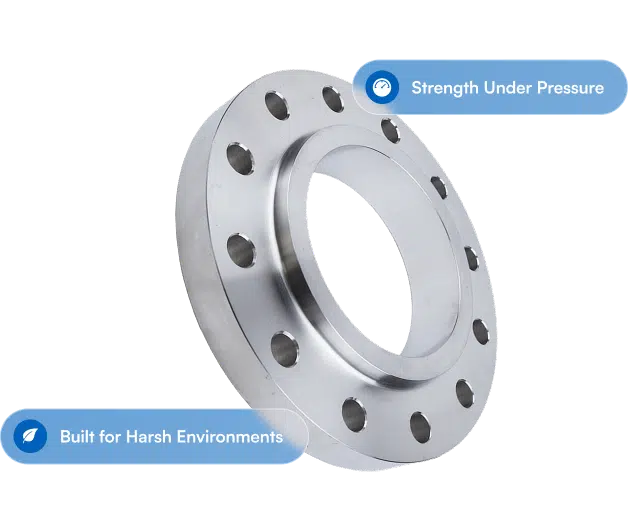
When selecting flanges, one of the primary considerations is whether to follow European vs. American flange standards.
Each standard has its specifications, advantages, and compatibility requirements. Understanding the differences between these standards is vital for ensuring system integrity, safety, and efficiency.
Importance of European vs. American flange standards
Before deciding which flange standard to follow, it is essential to understand the primary standards governing flange manufacturing and usage in Europe and the United States.
European flange standards
European flange standards are governed by the EN (European Norm) and DIN (Deutsches Institut für Normung) standards. Some of the most commonly used European flange standards include:
- EN 1092-1: This standard applies to circular flanges made from various materials, including steel, stainless steel, and cast iron. It classifies flanges based on pressure ratings (PN) such as PN6, PN10, PN16, PN25, PN40, etc.
- DIN 2501: A widely used standard in older European systems, replaced by EN 1092-1 but still relevant in some industries.
- BS 4504: A British standard commonly used in conjunction with EN and DIN standards.
European flanges are characterized by their metric system-based measurements and specific pressure rating classifications, which differ from their American counterparts.
American flange standards
In the United States, flange standards are primarily defined by the American National Standards Institute (ANSI) and the American Society of Mechanical Engineers (ASME). The most recognized American flange standards include:
- ASME B16.5: Covers pipe flanges and flanged fittings ranging from ½” to 24″ in diameter, with pressure classes such as 150, 300, 600, 900, 1500, and 2500.
- ASME B16.47: Applies to larger-diameter flanges (above 24 inches) and includes Series A and Series B flanges.
- MSS SP-44: Governs steel pipeline flanges used in high-pressure applications.
American flanges use the imperial measurement system and are often specified in inches and pounds per square inch (psi) rather than metric units.
Key differences between European vs. American flange standards
Measurement system and pressure ratings
One of the most fundamental differences is the measurement system. European standards use metric measurements (e.g., millimeters and PN ratings), whereas American standards use imperial units (e.g., inches and Class ratings). This distinction can make it challenging to interchange flanges between systems.
Bolt hole patterns and dimensions
European and American flanges differ in bolt hole patterns, facing types, and dimensions. Even if two flanges have similar diameters and pressure ratings, the bolt hole arrangements and gasket compatibility may differ, making them non-interchangeable.
Material specifications
While both standards specify similar materials, there may be variations in material grades, heat treatment requirements, and corrosion resistance properties. It is essential to verify material compatibility when selecting flanges.
Application and industry preferences
Different industries and regions have established preferences for specific standards. European standards are widely used in the EU and many international projects, while American standards dominate the U.S., Canada, and certain global industries such as oil and gas.
Which flange standard should you follow?
The decision to follow European vs. American flange standards depends on several factors, including project location, industry requirements, and existing system compatibility. Here are some key considerations:
- Project location
If your project is based in Europe, it is advisable to follow EN/DIN standards to ensure compliance with local regulations. Conversely, in the U.S. and North America, ASME/ANSI standards are the preferred choice.
- Industry-specific requirements
Certain industries have standardized requirements. For example, American flange standards are more prevalent in the oil and gas sector, whereas European flanges are commonly used in water treatment and general manufacturing industries in Europe.
- Existing system compatibility
If your piping system already follows a specific standard, it is generally best to maintain consistency to avoid compatibility issues and unnecessary modifications.
- International projects and global trade
For international projects, you may need to accommodate multiple standards. In such cases, working with a flange supplier that provides both European and American standard flanges can simplify procurement and compliance.
Ensure quality and compatibility with Texas Flange
Choosing the right flange standard is essential for maintaining system integrity, safety, and efficiency. Whether you require European or American standard flanges, it is crucial to work with a trusted supplier that ensures quality and compliance.
At Texas Flange, we offer a comprehensive selection of high-quality flanges that meet both ASME/ANSI and EN/DIN standards. Our products are manufactured to the highest industry standards, ensuring durability and reliability for your piping systems.
Contact Texas Flange today to learn more about European vs. American flange standards and find the right fit for your project!