What Is a Flange Coupling?
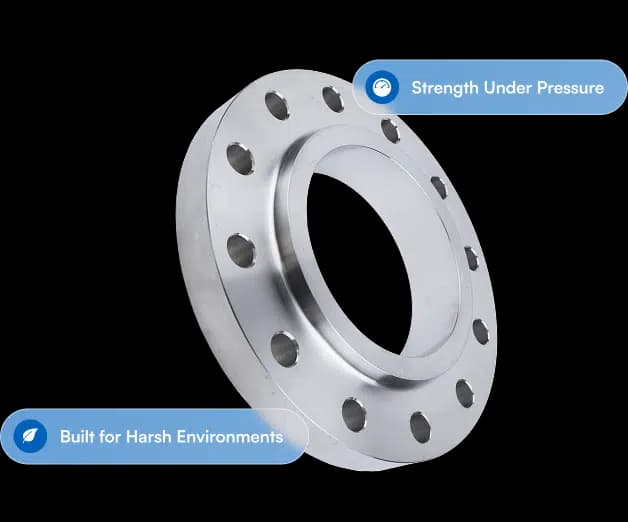
A flange coupling is a mechanical device that connects two rotating shafts end-to-end, allowing torque transmission from one shaft to the other. Unlike pipe flanges which create bolted connections in static piping systems, flange couplings are dynamic components that rotate with the shafts they connect. A flange coupling consists of two hubs, each with a flanged face drilled with bolt holes on a common bolt circle diameter. The hubs are bolted face-to-face with the bolts passing through aligned holes in both flanges.
The purpose of a flange coupling is to allow connection and disconnection of rotating machinery without disturbing the alignment of the shafts themselves. A motor shaft can be coupled to a pump shaft, with the ability to uncouple them later for maintenance simply by unbolting the flanges. This is far more practical than the alternatives, which would be welding the shafts together (impossible to disassemble) or using flexible elements that wear out over time.
Rigid vs Flexible Flange Couplings
Rigid flange couplings have no flexibility and are used when the connected shafts are perfectly aligned. The coupling transmits torque directly without any motion dampening or compensation. Rigid couplings are simpler, less expensive, and have minimal wear since no movement occurs between the coupling components during normal operation. However, they cannot tolerate any misalignment. If the shafts are even slightly out of parallel or have runout, rigid couplings place stress on bearings and create vibration.
Flexible flange couplings contain elastomeric elements, rubber inserts, or other compliant materials between the coupling hubs. These flexible elements absorb vibration, accommodate minor angular or parallel misalignment, and allow for some shaft end movement. Flexible couplings are more complex and more expensive than rigid couplings, but they're essential in real-world applications where perfect alignment is difficult to achieve. Most industrial machinery uses flexible couplings because achieving perfect alignment after installation is nearly impossible.
Common Applications
Flange couplings appear in countless industrial applications wherever shafts must transmit mechanical power. Pump motors commonly use flexible flange couplings to connect the electric motor shaft to the pump shaft. The coupling allows the motor and pump to be installed and aligned separately, then coupled together with the flexible element accommodating minor misalignments. Compressor drive systems use couplings to connect prime movers (motors, engines, turbines) to the compressor. Conveyor systems use couplings to couple motors to gearboxes, then gearbox outputs to conveyor pulleys.
Flange couplings are particularly valuable in systems requiring periodic disassembly. A pump that requires annual seal replacement can be uncoupled from its motor, removed for service, and reinstalled without disturbing the motor or prime mover. This parallel approach to maintenance is far more efficient than systems where the motor and pump are permanently connected.
Selection Criteria
When selecting a flange coupling, the primary consideration is torque capacity. The coupling must safely transmit the maximum torque the connected equipment can produce. Oversizing provides safety margin and accommodates future equipment upgrades. The bore size of each hub must match the shaft diameters being connected. If shaft diameters differ, a step-bore coupling with different hub bores can accommodate this. The bolt size, number of bolts, and bolt circle diameter determine the torque capacity.
Misalignment tolerance is another key selection criterion. If you expect angular misalignment up to 1 degree or parallel misalignment up to 0.1 inch, a flexible coupling designed for those tolerances is appropriate. Rigid couplings require planning and expensive alignment work, so they're typically only used when perfectly aligned shafts can be reliably maintained. The speed rating of the coupling must also exceed the operating speed. Flexible couplings have resonant frequencies and maximum safe operating speeds beyond which vibration becomes problematic.
Maintenance Considerations
Rigid flange couplings require minimal maintenance beyond occasional bolt inspection and lubrication if the coupling contains bearings (some designs do). The main maintenance task is verifying the bolts remain tight and checking for unusual vibration that might indicate developing misalignment problems. Flexible couplings require more attention because the elastomeric or compliant elements eventually fatigue and lose effectiveness. The rubber inserts in a flex coupling may crack, harden, or deteriorate after 5-10 years depending on the operating environment and temperature.
When a flexible coupling begins to fail, you'll notice increased vibration, noise, or reduced torque transmission capability. At this point, the coupling should be replaced rather than repaired. Keep spare flexible elements or complete spare couplings on hand if you operate critical equipment. Installation of a new coupling requires careful alignment because even a new coupling has limits on misalignment tolerance. Use dial indicators or laser alignment tools to verify that the shafts are within the coupling's acceptable misalignment range before operating.