Understanding Flange Dimension Tables
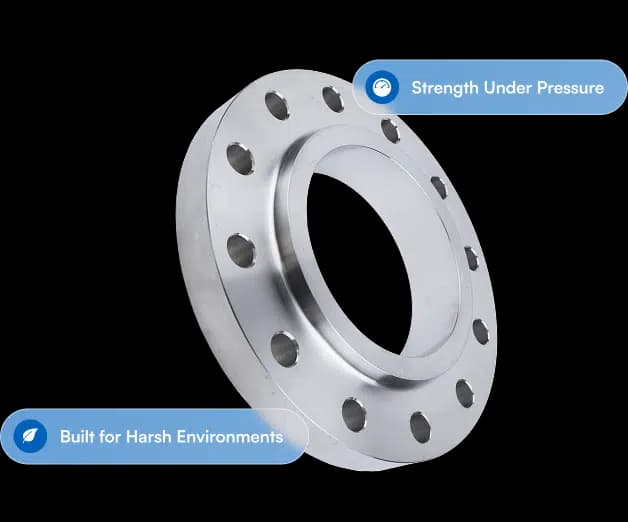
ASME flange dimension tables are systematic collections of physical measurements for flanges of different sizes, pressure classes, and types. The tables specify dimensions like bore diameter, outside diameter, thickness, bolt circle diameter, and bolt hole size and count. Each table corresponds to a specific pressure class, so you'll find separate tables for Class 150, 300, 600, 900, 1500, and 2500 flanges. Within each table, rows represent different nominal pipe sizes, starting from 1/2 inch and going up to 24 inches in typical industrial applications.
Understanding these tables is essential because they contain the objective specifications that manufacturers must meet when producing flanges. The tables also serve as the basis for purchasing since you specify the pipe size, pressure class, and sometimes the type of flange to identify exactly which dimensions apply. The tables also function as quality verification tools. When you receive a flange, checking its actual dimensions against the table confirms that the manufacturer produced a compliant product.
Key Dimensions Explained
The bore diameter (inside diameter) matches the nominal pipe size for standard flanges. A 2-inch flange has a bore diameter of approximately 2.375 inches, matching the 2-inch Schedule 40 pipe that connects to it. The outside diameter (OD) varies depending on pressure class. Higher pressure classes have larger outside diameters and more material to withstand the higher stress. This is why a Class 600 flange for a 2-inch pipe has a significantly larger OD than a Class 150 flange for the same pipe size.
The flange thickness is measured at the thickest part of the flange near the bore. Again, higher pressure classes have greater thickness. The bolt circle diameter (BCD) is the diameter of the imaginary circle passing through the centers of all the bolt holes. A flange's pressure rating depends partly on how this bolt circle diameter relates to the bore diameter. The bolt hole diameter and the number of holes vary by size and pressure class. An important dimension for sealed flanges is the raised face height for RF flanges, typically around 1/16 to 1/4 inch depending on size. For RTJ flanges, the groove depth and dimensions are specified instead.
Reading ASME B16.5 Tables
ASME B16.5 covers flanges up to 24 inches nominal pipe size. When using B16.5 tables, locate the pressure class table you need (for example, 'Weld Neck Flanges, Pressure Class 300'). Move across to find your pipe size in the leftmost column. Then read across that row to find the dimension you need. For a 4-inch, Class 300 weld neck flange, you might find: bore of 4.5 inches, OD of 9.25 inches, thickness of 0.75 inches, BCD of 7.5 inches, 8 bolt holes of 0.75 inch diameter.
Carefully distinguish between similar-sounding dimensions. The 'flange diameter' is the overall outside diameter. The 'back end distance' for a weld neck flange indicates how far the neck extends from the flange face. The 'inlet distance' for slip-on flanges shows the length of the slip-on portion. These dimensions matter when installing flanges because they affect how the flange sits relative to adjacent piping and equipment.
Large Diameter Flanges (B16.47)
When you need flanges larger than 24 inches, ASME B16.47 applies. These larger flanges are split into two series: Series A and Series B. Series A is more compact with smaller outside diameters for a given pressure class, while Series B is heavier and more robust with larger outside diameters. Series A is typically used when space constraints exist, while Series B is preferred for high-pressure applications or when maximum design margin is desired. The B16.47 tables are organized similarly to B16.5 tables, but include additional information because larger flanges are often custom or semi-custom products.
Larger flanges present additional considerations. Some dimension tables for large flanges list both raised face and ring joint versions in the same row, requiring you to specify which type you need. Additionally, the number of bolt holes often increases with diameter, and some large flanges may use through-bolts with nuts rather than studs. The weight of the flange becomes significant at these sizes, affecting handling, shipping, and installation procedures.
Practical Tips for Using Dimension Charts
When referencing dimension tables, create a checklist of the dimensions you need before looking them up. Know in advance whether you need bore diameter, outside diameter, bolt circle diameter, bolt hole count and size, and flange thickness. This preparation prevents missing critical specifications and catches situations where your application might require unusual dimensions. Always verify that the flange type (weld neck, slip-on, blind, etc.) matches what you're looking up, as different types have different dimensions even in the same pressure class.
If you're comparing dimension tables from different sources, verify they're all from the same ASME edition or revision. The ASME updates standards periodically, and older editions may have slightly different dimensions. When ordering from Flanges.AI, we provide dimension tables with every quote to ensure clarity about which exact dimensions you're receiving. If a dimension seems unusually small or large compared to your expectations, double-check your pressure class and pipe size. It's easy to mix up specifications, and catching errors before purchase prevents costly rework.