Flange Gasket Comparison: The Ultimate Guide to Choosing the Perfect Seal
Selecting the right flange gasket isn’t just about matching parts, it’s about preventing costly downtime, dangerous leaks, and system failures. Whether you’re working in oil and gas, petrochemical processing, or power generation, the gasket you choose directly impacts safety, efficiency, and your bottom line.
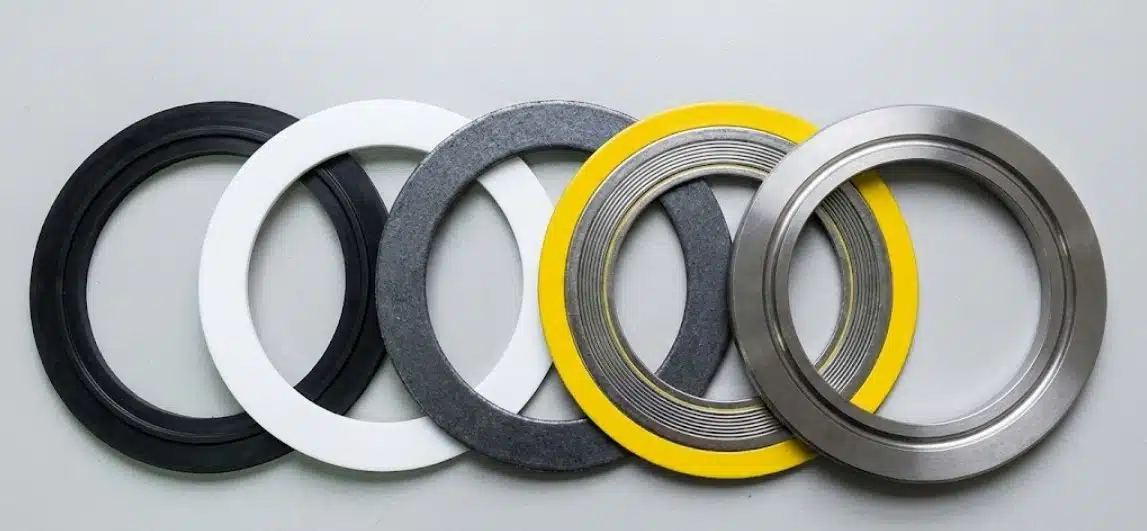
In this comprehensive guide, we’ll break down five essential gasket types: elastomer, PTFE, graphite, spiral-wound, and ring-type joint (RTJ). With this information, you can make an informed purchasing decision that keeps your systems running smoothly.
Why Your Flange Gasket Choice Matters
A flange gasket creates a critical seal between two mating surfaces, preventing fluid or gas leakage under pressure. Choose the wrong material, and you’re looking at:
- Unplanned shutdowns and production losses.
- Safety hazards from chemical or pressure leaks.
- Expensive emergency repairs.
- Environmental compliance issues.
The key? Matching your gasket material to your operating conditions: temperature, pressure, and chemical environment in your pipe, valve, and fitting assembly.
-
Elastomer Gaskets: The Workhorse for Standard Applications
Materials Used: Rubber-based compounds including EPDM, NBR (Nitrile), Viton, and neoprene.
Advantages:
- Superior flexibility and compression make installation straightforward, even for less-experienced technicians.
- Budget-friendly without sacrificing performance in appropriate applications.
- Excellent resistance to water, petroleum oils, and mild chemicals.
- Ideal seal recovery compensates for minor flange imperfections.
Limitations:
- Temperature ceiling typically maxes out around 250°F (varies by compound).
- Chemical vulnerability when exposed to aggressive acids, solvents, or caustic materials – not recommended for chemically sensitive applications.
- Not rated for extreme pressure applications.
Best Applications:
Water treatment facilities, HVAC systems, low-pressure oil and gas operations, food and beverage processing, and general industrial piping where operating conditions remain moderate.
-
PTFE Gaskets: Chemical Resistance Champion
Materials Used: Virgin PTFE (Teflon®) or glass-filled/carbon-filled PTFE variants.
Advantages:
- Superior chemical resistance, handles nearly every aggressive acid, alkali, and solvent when approved by application engineer.
- High-temperature capability up to 500°F in most applications.
- Non-contaminating and FDA-compliant for several pharmaceutical and food-grade processes.
- Low-friction surface prevents material adhesion and simplifies maintenance.
Limitations:
- Higher cost compared to elastomer alternatives.
- Cold flow susceptibility under sustained bolt loads can cause gradual deformation.
- Requires proper bolt torque management to maintain seal integrity.
Best Applications:
Chemical processing plants, pharmaceutical manufacturing, semiconductor fabrication, food and beverage industries, and any system transporting corrosive or ultra-pure fluids.
-
Graphite Gaskets: Mastering Extreme Heat
Materials Used: Flexible expanded graphite sheets, often with metal inserts or foil reinforcement.
Advantages:
- Exceptional heat resistance performing reliably up to 3000°F in non-oxidizing environments.
- High-pressure capability for demanding industrial applications.
- Outstanding thermal cycling performance maintains seal integrity through several cycles of repeated heating/cooling.
- Conformable to flange surfaces and compensates for minor irregularities.
Limitations:
- Oxidation concerns in air or oxygen-rich environments at elevated temperatures.
- Brittle characteristics require careful handling during installation.
- Not suitable for strong oxidizers like nitric acid or concentrated hydrogen peroxide.
Best Applications:
Steam systems, exhaust manifolds, refinery piping, power generation equipment, and high-temperature thermal oil systems where oxidizing conditions are minimal.
-
Spiral-Wound Gaskets: The Versatile Performer
Materials Used: Alternating layers of V-shaped metal windings (usually stainless steel) with soft filler material (graphite, PTFE, or mica).
Advantages:
- Extreme versatility handles wide temperature ranges (-400°F to 1800°F+) and high pressures.
- Thermal cycling resilience maintains seal integrity through several expansion/contraction cycles.
- Accommodates flange imperfections better than solid metal gaskets.
- Industry-standard reliability for critical applications across multiple sectors.
Limitations:
- Premium pricing reflects advanced construction and materials vs elastomer.
- Installation precision required, proper centering and bolt torque are critical.
- Potential for filler erosion in high-velocity fluid applications.
Best Applications:
Oil and gas production, petrochemical refineries, power generation plants, pipeline systems, and anywhere ASME B16.20 compliance is required. The spiral-wound gasket is often the default choice for critical flange connections and most associated with ASME B16.5 flanges.
-
Ring-Type Joint (RTJ) Gaskets: Built for Extreme Conditions
Materials Used: Solid metal construction in soft iron, carbon steel, stainless steel, Inconel, Monel, or other specialty alloys.
Advantages:
- Extreme pressure rating, routinely handles pressures exceeding 10,000 psi.
- Metal-to-metal seal provides leak-proof performance in the harshest conditions.
- Temperature extremes, material selection allows operation from cryogenic to 1500°F+.
- Proven reliability in safety-critical applications.
Limitations:
- Single-use design, RTJ gaskets cannot be reused after compression.
- Requires precision-machined ring grooves in flange faces (ASME B16.20 specifications).
- Higher initial cost for both gaskets and specialized flanges.
- Professional installation recommended to ensure proper seating.
Best Applications:
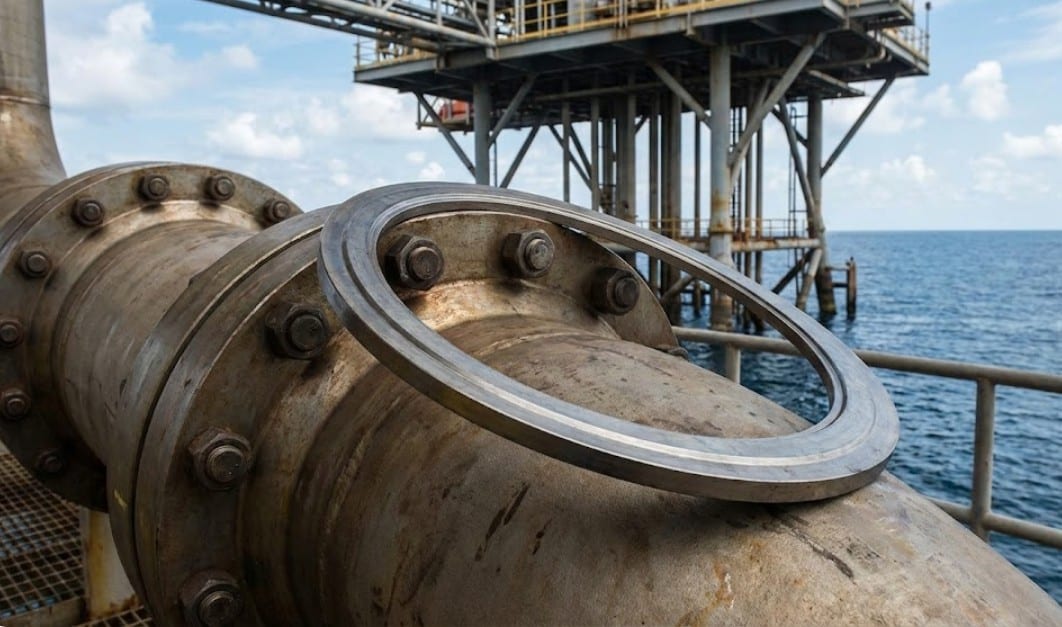
Offshore oil platforms, API flange wellhead equipment, high-pressure gas transmission, subsea pipelines, and critical refinery processes. When failure isn’t an option, the ring joint gasket delivers.
How to Select Your Flange Gasket: The Decision Framework
Step 1: Define Your Operating Conditions
- Temperature range: What are the minimum and maximum temperatures?
- Pressure requirements: Operating pressure and any pressure cycling?
- Fluid/gas characteristics: Chemical composition, pH, viscosity, and particle content.
Step 2: Assess Your Flange Configuration
- Flange type: Raised face, flat face, ring-type joint groove?
- Surface finish: Smooth machined vs. rough or damaged surfaces.
- Bolt loading: Available bolt torque and loading pattern.
Step 3: Consider Operational Factors
- Thermal cycling: Frequent temperature fluctuations?
- Maintenance accessibility: How often can you inspect and replace?
- Regulatory compliance: Industry-specific standards (API, ASME, ANSI)?
- Budget constraints: Initial cost vs. lifecycle cost.
Step 4: Match Material to Application
Quick Selection Guide:
|
Condition |
Recommended Gasket Type |
|
Low pressure, ambient temp |
Elastomer |
|
Chemical resistance needed |
PTFE |
|
High temperature (>500°F) |
Graphite or Spiral-Wound |
|
Extreme pressure (>2000 psi) |
Spiral-Wound or Ring Joint |
|
Thermal cycling |
Graphite or Spiral-Wound |
|
Ultra-high pressure (>5000 psi) |
Ring-Type Joint |
Common Flange Gasket Mistakes to Avoid
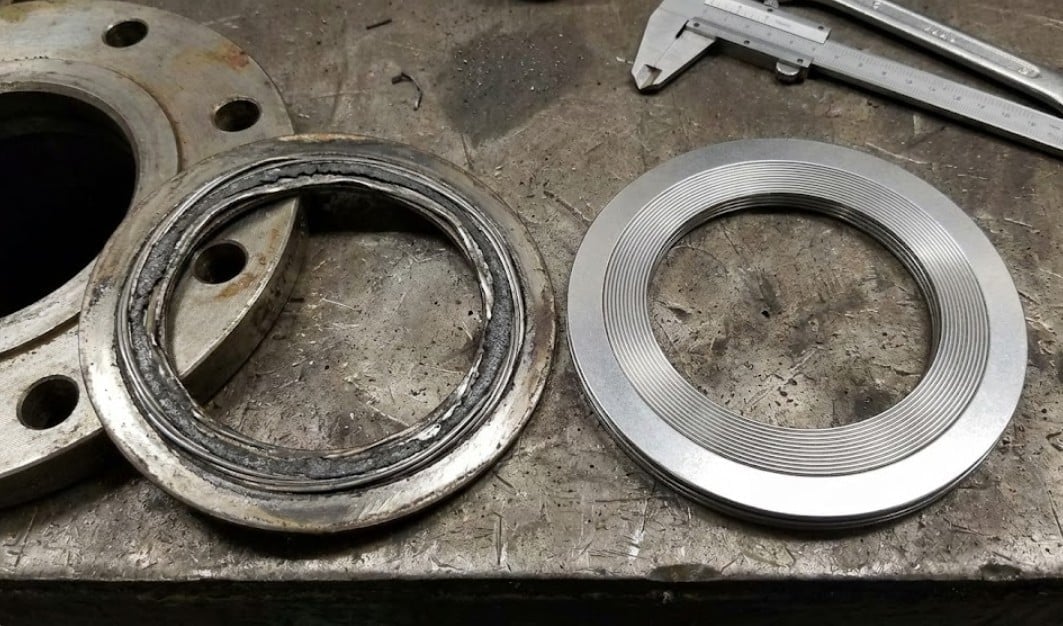
Over-torquing: Crushing gaskets damages sealing surfaces and reduces effectiveness, always follow manufacturer torque specifications.
Reusing single-use gaskets: Ring joint and many metallic gaskets lose sealing capability after compression.
Ignoring chemical compatibility: Even brief exposure to incompatible chemicals can cause rapid gasket degradation.
Poor surface preparation: Removing old gasket material, rust, and debris is non-negotiable for reliable sealing.
Mismatched materials: Using standard materials in high-temperature or chemical environments guarantees premature failure.
Ring Joint vs. Standard Gaskets: When to Upgrade
The ring-type joint gasket represents the premium solution for extreme conditions. Consider upgrading to RTJ groove flanges and gaskets when:
- Operating pressures exceed 5,000 psi consistently.
- Applications involve high-pressure hydrogen service.
- Subsea or offshore installations demand absolute reliability.
- Temperature extremes challenge conventional gasket materials.
- Regulatory requirements mandate metal-to-metal sealing.
While ring joint flanges require higher initial investment due to precision machining, the long-term reliability in critical applications justifies the cost.
Get Expert Guidance on Your Flange Gasket Selection
Still weighing your options? The gasket selection process becomes simpler with experienced guidance. Factors like flange class rating, bolt material compatibility, and industry-specific requirements all influence your ideal choice.
At Texas Flange, our technical team brings decades of real-world experience in oil and gas, petrochemical, and industrial applications. We don’t just sell flanges – we help you determine reliable sealing solutions and can point you in the right direction.
Contact our flange specialists today for flange and hardware information based on your applications. The right hardware choice isn’t just about avoiding leaks – it’s about maximizing uptime, safety, and operational efficiency.