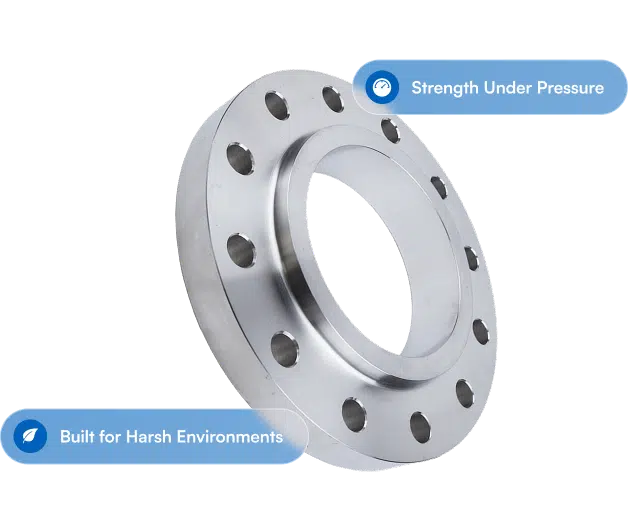
Flange Schedules Demystified: Choose Sch 40 or Sch 80
Flange Schedules Demystified: Sch 40 vs Sch 80 and Beyond
Flange schedules might seem complicated given the variety of options available, but they’re actually somewhat straightforward once you break them down. Whether you’re specifying flanges for a piping project, or troubleshooting an existing assembly, understanding flange schedules (like Sch 40 and Sch 80) is critical for system performance and PVF selection. Let’s cut through the jargon and explain what these schedules mean, their impact on wall thickness, pressure rating, and flow.
What are Flange Schedules?
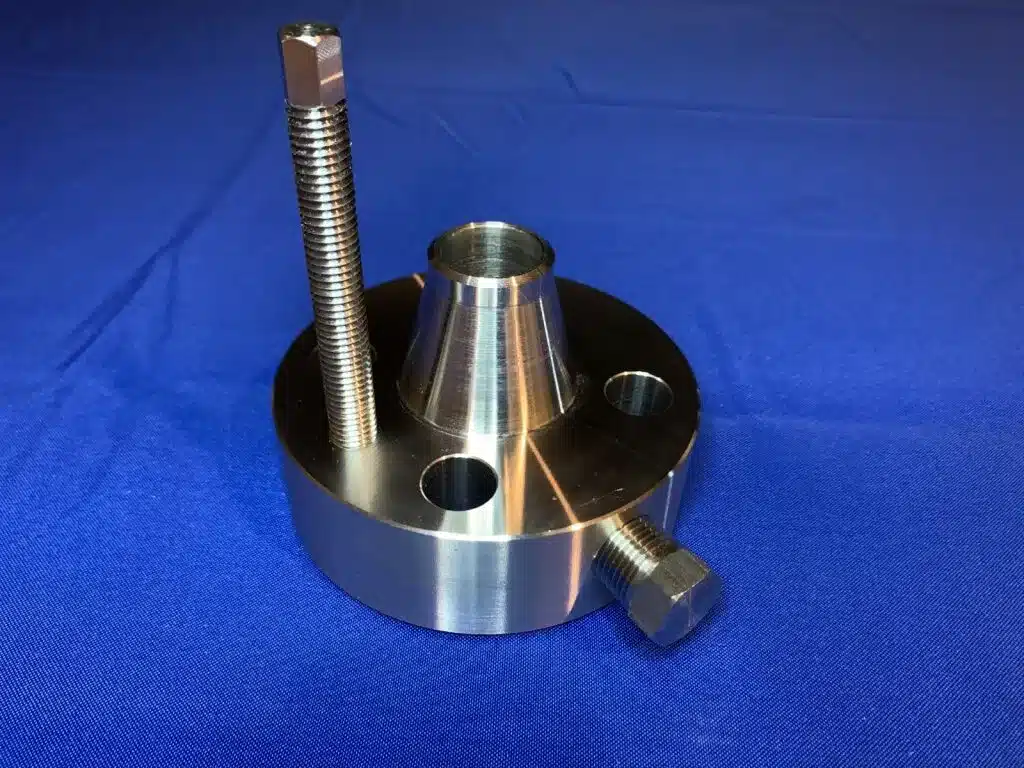
Simply put, a flange schedule indicates the wall thickness of the pipe that connects to the flange, and therefore the thickness at the point of weld for two connecting PVF items. It’s a term commonly used in piping to align the dimensions of pipes with their corresponding weld neck, socket weld, and custom nozzle flanges. Selecting the correct schedules (like Sch 40 or Sch 80) ensures you get the right fit and performance out of your components.
The schedule number / schedule bore (Sch) essentially relates to the pipe’s wall thickness. Here’s how it works:
- Sch 40S (Standard Wall): A common specification in many applications. It’s suitable for moderate pressure and flow conditions.
- Sch 80S (Extra Strong/Extra Heavy): Designed for higher pressure or when additional wall thickness is needed to handle wear or stress.
- Note that schedule 40 and schedule 40S is the same in flanges NPS 10” and smaller, whereas schedule 80 and schedule 80S is the same for NPS 8” and smaller. On larger sizes the correlation breaks off and we refer to schedules as schedule standard or TRUE schedule 40, for example. It is incredibly important to make this distinction to avoid mistakes in ordering!
Think of the schedule as the Goldilocks principle for flange weld connections; choosing the right schedule ensures your system isn’t overbuilt or underperforming.
The Formula Behind the Schedule Number
The schedule designation isn’t an arbitrary number; it’s historically related to the pipe’s approximate pressure capacity, though modern practice relies on precise wall thickness measurements.
The original relationship, based on an early formula from the American Standards Association (ASA), connected the schedule number (Sch) to the pipe’s service pressure and allowable stress:
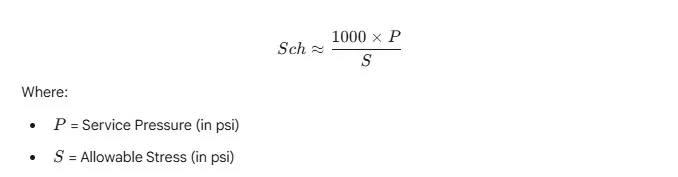
While this formula is now largely historical for calculating the required thickness (modern methods use more complex design codes), it shows that a higher schedule number directly correlates to a thicker pipe wall capable of handling higher pressure. The consistency in this relationship is arbitrary when viewing a schedule bore chart, but the correlation between higher schedule and increased thickness is obvious.
Crucially, for a given Nominal Pipe Size (NPS), the pipe’s Outer Diameter (OD) remains constant regardless of the schedule. It is the Inner Diameter (ID) that changes as the wall gets thicker. This is applicable for weld neck and socket weld flanges, whereas the schedule does not affect the bore for other connections such as slip on flanges.
Wall Thickness and Pressure Rating
Wall thickness is where flange schedules have a direct impact on performance. A thicker wall allows the pipe (and flange) to handle higher pressures. For example:
- Sch 40 is thinner and works well for systems where moderate pressure is expected.
- Sch 80, with its thicker walls, can withstand higher pressures, making it ideal for applications like industrial plants or oil and gas systems.
- Sch160 and Sch XXS/XXH are for the highest pressure applications, which are often for class 2500# ANSI/ASME flanges, as well as API 6B and 6BX connections.
The choice between Sch 40 and Sch 80 often boils down to safety margins, operational pressure requirements, and the specific nature of the fluid or gas being transported.
How Flange Schedules Affect Flow
Now, here’s the kicker: wall thickness influences more than just pressure-handling. As it determines the internal diameter of the pipe, if therefore ultimately impacts flow rate and velocity of the gas or fluid within the pipeline.
A thicker wall (like in Sch 80) reduces the internal diameter (ID). This reduction in ID causes two key effects:
- Reduced Flow Capacity: The smaller cross-sectional area means a slight restriction in the overall volume of fluid or gas that can pass through compared to the thinner-walled Sch 40 pipe.
- Increased Fluid Velocity: To maintain a certain mass flow rate, the fluid must travel faster through the narrower Sch 80 pipe. This higher velocity can increase pressure drop due to friction and potentially lead to issues like cavitation or increased erosion in the long term.
This tradeoff is important. If system efficiency and maximum flow rate are your top priorities in a low-to-moderate pressure application, a thinner wall (Sch 40) might be the way to go. On the other hand, high-pressure systems must have the durability and integrity of a thicker-walled pipe (Sch 80 or higher), even if it means a slight reduction in flow. This offset in flow can sometimes be mitigated by designing an assembly with a larger NPS (nominal pipe size) for all of the PVF items involved.
Sch 40, Sch 80, and Beyond
While Sch 40 and Sch 80 are the most commonly used schedules, there’s a range of options designed to fit highly specific operational needs:
- Sch 10 is even thinner than Sch 40, suitable for lightweight, low-pressure systems, although it is not necessarily as readily available as schedule 40 or 40S/Standard.
- Sch 160 and SchXXH/XXS fall on the opposite end of the spectrum, offering extreme wall thickness for heavy-duty, high-pressure environments.
Understanding schedules beyond the most commonly selected standard or extra heavy walls is helpful. You should aim to expand your options and allow for tailoring systems to your unique project requirements when pressure or temperature matter.
Installation and Material Implications
The choice of schedule also impacts the installation and fabrication of the piping system:
- Welding: Thicker walls (Sch 80+) require more weld material, longer welding times, and often more specialized welding procedures and pre-heating to ensure a full penetration weld, increasing labor costs.
- Weight: Heavier schedule pipes require more robust supports and hangers. The overall weight of the piping system can significantly impact structural design.
- Material: While schedules are generally independent of material (e.g., you can have Sch 40 Carbon Steel or Sch 40 Stainless Steel), the choice of material combined with the schedule determines the final pressure and temperature rating. For example, a high-strength alloy in Sch 40 might still outperform a lower-grade carbon steel in Sch 80 for specific corrosive applications.
Why Flange Schedules Matter
Choosing the correct flange schedule is more than a technicality – it’s about optimizing performance, ensuring safety, and extending the lifespan of your system. The wrong schedule can cause issues ranging from leaks to early system failure, so it’s worth getting it right the first time.
As mentioned previously, you will notice a correlation between a higher flange schedule number and a larger wall thickness, which has an inverse relationship with the size of a flange bore/ID. However, some of these schedules even overlap for the same nominal pipe size, so the consistency is not an exact science (for example, on a 20” flange, a schedule 20 bore is the same as a schedule standard bore). This is precisely why you should carefully check these dimensions during your selection phase and prior to ordering.
For your convenience, you can visit our website and download a copy of our online catalog to have this information on hand, or view the wall thickness chart on our “Flange Dimensions” drop-down menu option from our home page. Remember that while socket weld flanges are much less popular than weld neck flanges, the same principle applies in selecting schedule bore/wall thickness for socket welds.
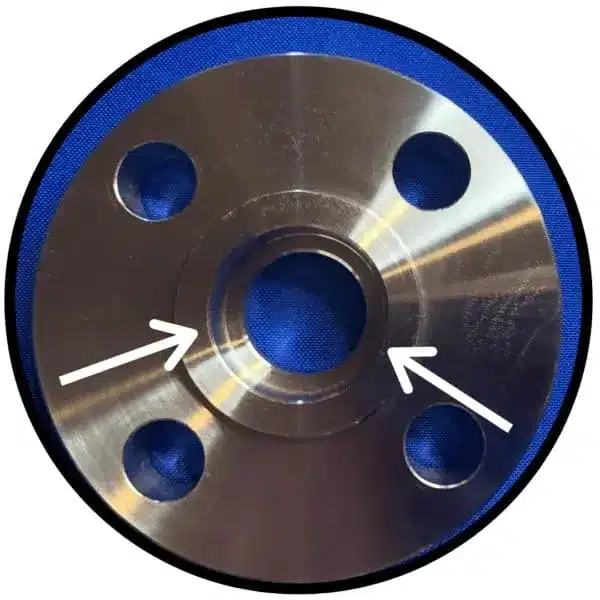
If you’re unsure about the best flange schedule for your application, don’t sweat it. At Texas Flange, we’re happy to help you figure it out. Contact us when you’re ready.
Have Questions? We’ve Got Answers!
For more insights into everything flange-related, check out our detailed section. Whether you’re dealing with DIN, ANSI, or custom components, we’ve got the answers to your toughest flange questions.
Flange schedules don’t have to be a headache. Armed with the basics, you can make confident decisions that keep your projects running like they should.