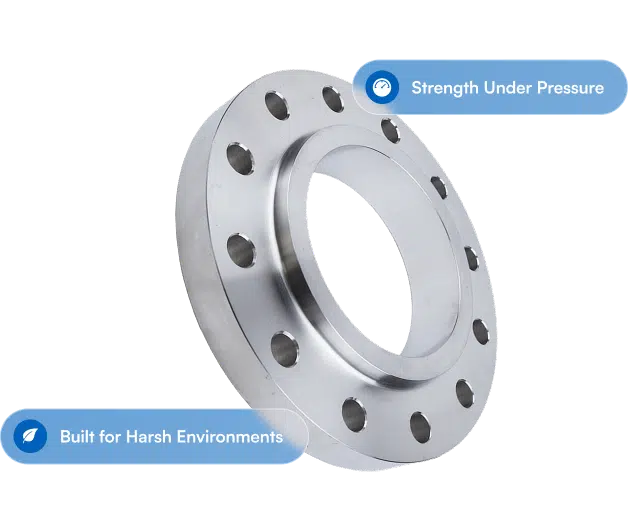
Knowing how to calculate blind flange thickness is critical for designing safe and efficient piping systems. A blind flange provides a secure, customer-focused closure for pipelines, preventing leaks and ensuring system integrity under pressure. By understanding the factors affecting thickness, applying proper standards, and avoiding common errors, engineers will ensure safety, reliability, and compliance in all applications.
What Is a Blind Flange?
Definition and Purpose
A blind flange is a solid disc without a central bore, used to seal the end of a pipe or pressure vessel opening completely. Its main function is to stop fluid or gas flow while providing a durable and reliable termination point.
Common Applications
Blind flanges are commonly used in industries such as:
- Oil and gas
- Chemical processing
- Water treatment plants
- Industrial systems requiring temporary or permanent closures
They are also essential when transitioning from DIN or ANSI to ASME standards, by designing your own dimensions and checking with an engineer to run calculations. Explore the full range of Blind Flanges for large and small orders.
Factors Affecting Flange Thickness
Operating Pressure
The internal pressure of a pipeline determines the required thickness. Higher pressures will require flanges with greater strength to avoid deformation.
Temperature Effects
Elevated temperatures reduce material strength, which will increase the necessary flange thickness to maintain system safety.
Material Selection
Material type directly affects thickness requirements. Carbon steel, stainless steel, and alloy steels have different allowable stress values according to ASME/ANSI standards.
Flange Diameter
Pipe diameter impacts bending stress. Only appropriately thick blind flanges will resist deformation at larger diameters.
Gasket Type and Bolt Load
The type of gasket and bolt pattern affects force distribution across the flange face. For ring joints, ensure calculations reference the ring joint face flange.
Understanding these factors is key when learning how to calculate blind flange thickness accurately.
ASME Guidelines for Blind Flange Thickness
Design Standards
ASME BPVC Section VIII, Division 1 provides the primary standards for calculating blind flange thickness. These standards ensure that flanges will withstand design pressure without failure.
Material and Dimension Considerations
Always verify material allowable stress and flange dimensions according to your specifications. In cases where ASME/ANSI standards are not applicable, cast flanges can be designed using the same rigorous approach. Review the ASME Flanges section for technical guidance.
Following these standards is essential for engineers who want to master how to calculate blind flange thickness correctly.
Step-by-Step Calculation Method
Step 1: Identify Design Pressure and Temperature
Determine the maximum operational pressure and temperature your flange will experience.
Step 2: Determine Material Allowable Stress
Use ASME standards tables to find the allowable stress for your chosen material.
Step 3: Measure Internal Diameter
Measure the pipe or vessel opening where the blind flange will be installed.
Step 4: Apply ASME Formula
Apply the ASME formula, considering pressure, diameter, and material stress. This ensures the flange thickness meets safety and performance requirements.
Step 5: Add Corrosion Allowance
Include a corrosion allowance to ensure long-term durability under operating conditions.
This method guarantees that your blind flange will meet all customer-focused design requirements and perform reliably in operation.
Example Calculation
Scenario
Consider a carbon steel blind flange with:
- Design pressure: 300 psi
- Operating temperature: 400°F
- Flange diameter: 12 inches
Calculation Result
Using ASME standards and considering pressure, temperature, and material properties, the required blind flange thickness is approximately 1.75 inches. This ensures reliable performance while maintaining compliance with industry standards. Following these steps demonstrates a proper understanding of how to calculate blind flange thickness for any system.
Common Mistakes to Avoid
Getting a Slip-On Instead of a Socket Weld
Ensure correct flange type selection. Confusing a blind flange with a slip-on or socket weld flange can result in system failure.
Ignoring Temperature Effects
Material strength decreases with temperature, which will compromise the flange if ignored.
Overlooking Corrosion Allowance
Always include additional thickness for corrosion, especially in chemical or water systems.
Using Incorrect Material Properties
Verify allowable stress values using ASME tables to prevent under-designing.
Relying Solely on Nominal Thickness
Only using nominal thickness can cause underperformance; actual thickness must comply with your design calculations.
Skipping Professional Verification
Always validate your calculations with an engineer to confirm compliance with ASME/ANSI standards.
🔧 Ready to Specify Your Blind Flange with Confidence?
Mastering how to calculate blind flange thickness is essential for safety, durability, and efficiency in piping systems. By considering pressure, temperature, material, diameter, and bolt load—and strictly following ASME/ANSI standards—you can ensure reliable performance for large and small orders. For expert guidance, technical resources, or to discuss your specifications, visit Texas Flange or contact our team at Contact Us.