What Is a Flange Bolt Pattern?
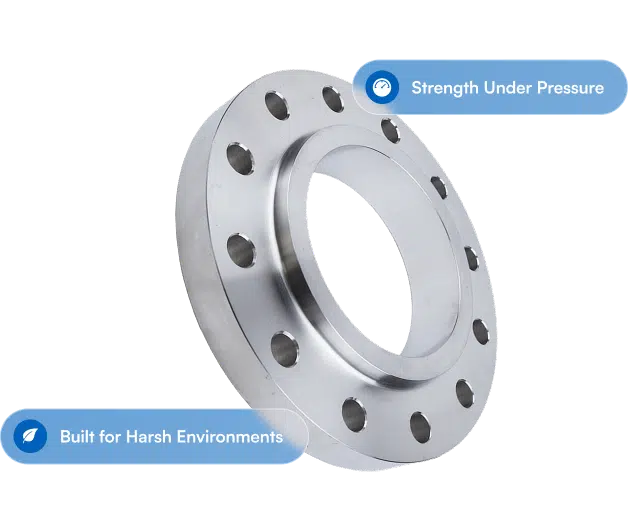
An ASME flange bolt pattern refers to the precise arrangement of bolt holes on a flange. It is critical for ensuring proper alignment and sealing when connecting two flanges in a piping system. A misaligned or incompatible bolt pattern can lead to leaks, downtime, and even equipment failure.
Definition and Role in Flange Connection Integrity
The ASME flange bolt pattern determines how the flange mates with its counterpart. It includes details such as the bolt circle diameter (BCD), number of bolt holes, and hole size. These specifications ensure that flanges maintain a secure, uniform seal under pressure.
Key Terms: Bolt Circle, Number of Bolts, Hole Size
- Bolt Circle Diameter (BCD): The diameter of the circle on which the bolt holes are evenly distributed.
- Number of Bolts: Varies by flange size and class.
- Hole Size: Must match the bolt diameter and accommodate the required strength for the application.

ASME Standards for Bolt Patterns
Standards like ASME B16.5 (for NPS ½” to 24″) and ASME B16.47 (for larger diameters) define dimensions and tolerances for each ASME flange bolt pattern. These standards ensure global consistency in manufacturing and installation.
Overview of Flange Classes and Corresponding Patterns
Different pressure classes (150, 300, 600, etc.) have unique ASME flange bolt pattern requirements. A Class 150 flange, for instance, may have fewer and smaller bolts than a Class 600 flange of the same diameter. When comparing standards, it’s essential to note that DIN and ANSI Flanges may follow different layouts and tolerances.
Step-by-Step Guide to Measuring a Bolt Pattern
Tools You’ll Need
To measure an ASME flange bolt pattern, you’ll need:
- A measuring tape or caliper
- A flange dimension reference chart
- A straight edge (optional for hole alignment)
Measuring Bolt Circle Diameter (BCD)
Measure from the center of one bolt hole directly across to the center of the opposite hole. This gives you the bolt circle diameter, a critical dimension in any ASME flange bolt pattern.
Counting Holes and Spacing
Count the number of evenly spaced bolt holes around the flange. Some flanges may have an even number, while others—especially in custom or offset designs—may differ. Make sure your count matches the expected pattern for the flange class.
Common ASME Bolt Patterns by Flange Type
Weld Neck
Weld neck flanges have tapered hubs and long necks, requiring precise ASME flange bolt pattern matching for high-pressure applications.
Blind
Used to close the end of a piping system, blind flanges still require proper bolt alignment, especially in systems where inspection or future expansion is planned.
Slip-On
Slip-on flanges are easier to install but still depend on a precise ASME flange bolt pattern to ensure uniform pressure distribution and sealing.

Printable Bolt Pattern Chart (Optional)
For quick reference in the field or workshop, many engineers use a printable ASME flange bolt pattern chart. These templates can save time and improve accuracy during fabrication or inspection.
You can view flange dimensions and weights using this flange dimension and weight chart from Texas Flange.
Why Accurate Bolt Pattern Specs Save Time and Cost
Getting the ASME flange bolt pattern right the first time prevents installation errors, field rework, and costly delays. Whether you’re sourcing standard components or designing custom flanges, accurate measurements are essential for maintaining safety and performance across piping systems.
Download our bolt pattern reference chart or contact us for custom ASME flange specifications. Texas Flange offers expert guidance on custom flanges, flange dimensions, and complete ASME flange solutions to help you get the job done right.
📐 Request a quote or speak with our technical team today to avoid costly mistakes from the start.