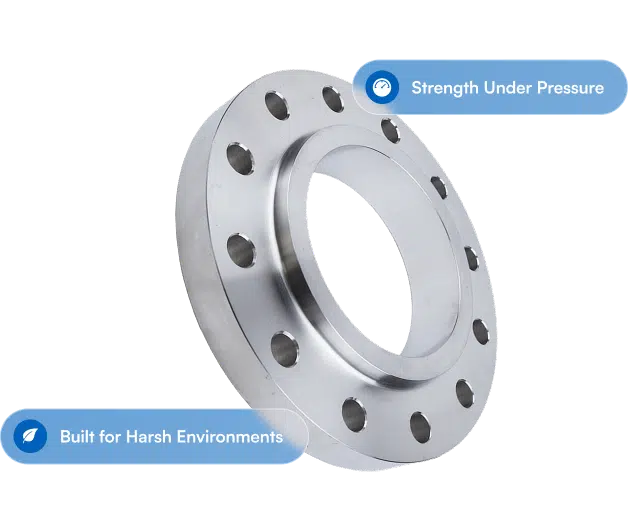
A nipoflange is a special type of pipe fitting that effectively combines a weld neck flange with a nipolet into a single, solid component. This integrated design creates a robust and reliable connection point in a piping system, streamlining the installation process while ensuring excellent structural integrity.
Nipoflanges are particularly well-suited for high-pressure systems, as their one-piece construction minimizes potential leak paths and enhances durability.
By joining the branch connection and flange in a seamless unit, a nipoflange provides a practical solution for industries where safety, strength, and compactness are key requirements.
What is a nipoflange?
The nipoflange is made to help with 90-degree branch joins in pipe systems Its built-in design makes sure it is strong and easy to put in
Combination of nipple and flange
By combining the traits of a nipple and a flange, nipoflange helps smooth changes between main pipes and branch lines, cutting down on possible leak spots.
Ideal for high-pressure lines
Because of its strong build the nipoflange is good for high-pressure tasks, like those seen in oil and gas installations
Requires butt welding
To install a nipolet, the end needs to be butt-welded to the main pipe. This ensures a strong, leak-free connection.
What is a weldoflange?
A weldoflange is a specialized flange that seamlessly integrates the features of a traditional welding neck flange with a weldolet.
This unique design creates a reliable and robust branch connection, and allow for efficient integration of branch pipelines into existing main lines. By combining these two components into a single piece, the weldoflange simplifies the installation process, reducing the number of welding operations required, and minimizing potential leak paths.
This makes the weldoflange particularly valuable in industries such as oil and gas, petrochemical, power generation, and chemical processing, where systems often operate under high pressures and temperatures.
Weldoflanges can be installed using either butt welding or socket welding, depending on project requirements. Additionally, their reinforced design helps distribute stresses more evenly across the connection, making them useful in applications where thermal expansion, vibration, or dynamic loading could otherwise compromise the integrity of the system.
Their versatility, strength, and ease of installation make weldoflanges a preferred choice for engineers looking to ensure safe, durable, and efficient piping systems.
Design overview
The weldoflange merges the benefits of a weldolet and a flange into a single piece. This design creates a reinforced branch connection that’s ideal for high-stress environments.
Applications in oil & gas and steam systems
Weldoflanges are widely used in industries like oil and gas, chemical processing, and power generation. They’re perfect for connecting branch lines to main pipelines.
Welding methods
Depending on your project’s requirements, weldoflanges can be installed using either butt welding or socket welding.
Key differences between nipoflange and weldoflange
| Feature | Nipoflange | Weldoflange |
| Connection type | Butt weld | Butt or socket weld |
| Pressure rating | Suitable for high-pressure applications | Suitable for high-pressure applications |
| Design | Integrated nipple and flange | Integrated weldolet and flange |
| Best use case | Compact layouts, high-pressure lines | Reinforced connections, thermal expansion |
| Installation space | Requires less space | May require more space |
Pressure and temperature handling
Both nipoflanges and weldoflanges are designed to withstand high pressures and temperatures. The choice between the two often depends on the specific requirements of the application.
Strength and durability comparison
While both fittings offer robust performance, weldoflanges provide additional reinforcement, making them more suitable for systems experiencing thermal expansion or vibration.
When to use a nipoflange
Nipoflanges are useful for installations where space is at a premium, thanks to their integrated design that merges a welding neck flange with a nipolet into a single, seamless component.
This compact configuration not only simplifies the installation process but also reduces the overall footprint of the piping system, making it easier to fit into tight or crowded layouts.
One of the advantages of nipoflanges is their advantages of nipoflanges is their ability to handle high-pressure environments, which is crucial in industries like oil and gas, petrochemical, and offshore operations. Their robust construction and high-quality forged material ensure that they can withstand the demanding conditions found in these sectors, including elevated pressures and temperatures.
This makes them well-suited for use in refineries, offshore platforms, and other critical facilities where maintaining the integrity of the piping system is paramount for safety and efficiency. Additionally, their butt-welded connection ensures a secure and leak-proof seal, further enhancing the reliability of the system.
By choosing a nipo flange, engineers and project managers can confidently design and build piping systems that meet the highest performance and safety standards, even in the most challenging industrial environments.
When to choose this type of flange
Weldoflanges offer reinforced connections, making them well-suited for applications where additional strength and durability are essential.
These flanges are designed to handle systems that experience dynamic loads, such as vibration, pressure fluctuations, and thermal expansion or contraction.
By combining a traditional weld neck flange with a weldolet connection, a weldoflange creates an , integral joint that helps prevent leaks and mechanical failures. This makes them valuable in industries like oil and gas, chemical processing, and power generation, where pipelines often operate under extreme conditions.
Their design distributes stress away from the branch connection, ensuring that even under high-pressure or high-temperature scenarios, the integrity of the pipeline system is maintained.
Moreover, the reinforced construction of a weldoflange minimizes the risk of fatigue cracking, which can be a major concern in pipelines exposed to thermal cycling or vibration over time. Compared to standard flanges or fittings, weldoflanges provide a safer and longer-lasting solution by enhancing mechanical strength and overall system reliability.
weldoflanges are often the preferred choice for engineers and project managers seeking to optimize performance and reduce maintenance costs, ensuring safe and efficient operations in even the most demanding environments.
Making the right choice
Selecting between a nipoflange and a weldoflange depends on a range of factors that should be considered to ensure optimal system performance and safety.
These factors include space constraints, pressure requirements, temperature fluctuations, and the presence of thermal expansion or vibration within the piping system.
For instance, if the installation area is limited and requires a more compact solution, a nipoflange’s integrated design offers an advantage by saving valuable space. Its straightforward butt-weld installation is useful in areas where maneuverability is restricted.
On the other hand, if the system is expected to handle thermal expansion or is subject to constant vibration — common in refineries, chemical plants, and offshore platforms — a weldoflange may be the preferred choice.
Its reinforced connection design enhances mechanical strength and helps absorb dynamic loads, reducing the risk of fatigue cracking and ensuring longer service life under demanding conditions.
Both the nipo flange and the weldo flange are engineered to meet rigorous industry standards, ensuring reliable performance in high-pressure environments. However, understanding the specific needs of your application is essential for selecting the right flange type that meets safety and performance requirements while maintaining system efficiency.
If you’re unsure about which option is best for your project, don’t hesitate to reach out to Texas Flange.
Our team of experts can provide CAD / 3D flange drawings, material compatibility advice, and customized solutions tailored to your unique industrial needs. Let Texas Flange help you make the right choice and keep your systems running smoothly.