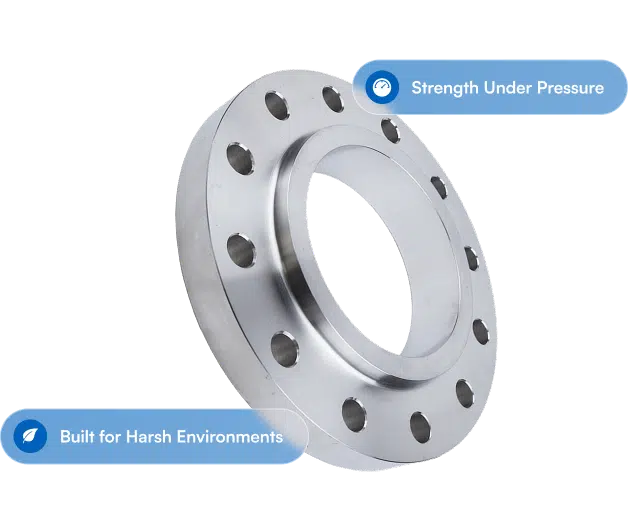
Flange face types describe the surface shape of a flange at the point where it joins with a gasket and another flange or fitting.
The configuration of the flange face is essential for creating a reliable, leak-proof seal in a piping system. The choice of flange face type depends on various factors, including pressure, temperature, and the properties of the fluid being conveyed.

Standard flange face types include:
- Raised face (RF): It has a slightly elevated ring around the bore, creating a focused sealing surface.
- Flat face (FF): The flange’s surface is completely level, ensuring complete contact with the gasket.
- Ring-type joint (RTJ): It includes a recessed groove to accommodate a metal ring gasket, making it ideal for high-pressure uses.
- Tongue and groove (T&G): Features matching raised and recessed surfaces for alignment.
- Male and female (M&F): It resembles T&G in design but varies in size and intended use.
Each type of flange face and gasket design serves distinct and specific purposes, tailored to meet the unique demands of various piping systems. The selection process depends heavily on factors such as the operating pressure, temperature, type of fluid being transported, and the need for leak prevention.
Engineers carefully evaluate these requirements to ensure the chosen flange face and gasket combination will provide a reliable, durable, and safe seal. Proper selection is critical to maintaining system integrity, preventing leaks, and optimizing overall performance in industrial, chemical, and processing environments.
Therefore, the right choice is essential for the efficient functioning of the entire piping system.
What is a raised face (RF) flange?
A Raised Face (RF) flange features a slightly elevated area around the bore—usually 1/16 inch (1.6 mm) for pressure classes 150 and 300, and 1/4 inch (6.4 mm) for higher classes. This raised surface focuses the pressure on the gasket, improving the seal’s performance.
Applications:
- Oil & gas industry flanges: Frequently chosen because they can withstand high pressures and temperatures.
- Petrochemical flanges: Perfect for processing facilities where maintaining a leak-free system is essential.
- Power plant industries flanges: Appropriate for systems that handle high-pressure steam and water.
Suitable gasket types:
- Gaskets made by winding a spiral of alternating metal and filler materials.
- Gaskets that have a metal outer casing encasing a softer sealing material inside.
- Gaskets featuring a metal core with raised cam-shaped profiles for enhanced sealing performance.
These gaskets are designed to withstand the concentrated pressure exerted by the raised face, ensuring a reliable seal.
What is a flat face (FF) flange?
A Flat Face (FF) flange has an even sealing surface that makes complete contact with the gasket. This design is typically used in systems where the mating flange or component is made of brittle materials like cast iron, which can be damaged by the concentrated pressure of a raised face.
Applications:
- Waterworks flanges: Common in water treatment and distribution systems.
- Fire protection systems: Used in sprinkler and hydrant installations.
- HVAC systems: Suitable for heating, ventilation, and air conditioning applications.
Compatible gasket types:
- Gaskets that cover the entire face and are made from soft materials such as rubber or non-asbestos fiber.
These gaskets cover the entire face of the flange, distributing the pressure evenly and preventing damage to the flange or connected components.
Key differences between raised face and flat face flanges
| Feature | Raised face flange (RF) | Flat face flange (FF) |
| Pressure handling | Suitable for high-pressure applications | Suitable for low-pressure applications |
| Gasket compatibility | Compatible with various gasket types, including metallic and semi-metallic | Typically used with full-face soft gaskets |
| Surface finish | Raised area with a specific finish to enhance sealing | Entire face is flat, requiring full-face gasket |
| Applications | Oil & gas, petrochemical, power plants | Waterworks, HVAC, fire protection systems |
The choice between RF and FF flanges depends on the specific requirements of the piping system, including pressure, temperature, and the materials involved.
When Should You Use a Raised Face Flange?
Raised Face flanges are preferred in systems where high pressure and temperature are present. They are compatible with various pipe classes, such as Class 150, 300, and higher, as defined by ASME standards. Their design supports various gasket types, offering versatile sealing options.
Guidelines:
- Use in systems where leak prevention is critical.
- Suitable for applications involving hazardous or corrosive fluids.
- Ideal for connections requiring frequent disassembly and reassembly.
When to Choose a Flat Face Flange
Flat Face flanges are ideal for systems involving brittle materials like cast iron, where the use of a raised face could cause damage due to uneven pressure distribution. They are also more cost-effective and simpler to install, making them suitable for less demanding applications.
Advantages:
- Prevents overstress in brittle materials.
- Cost-effective for low-pressure systems.
- Makes alignment and installation easier.
Common Uses:
- Municipal water systems.
- Fire protection piping.
- HVAC installations.
Compatibility with Gaskets and Bolt Torque
Proper gasket selection and the application of the correct bolt torque are absolutely essential for achieving a reliable, leak-free flange connection in any piping system.
The choice of gasket material and design must align with the system’s operating conditions, such as pressure, temperature, and the chemical properties of the fluid being transported. An improper gasket can fail prematurely, leading to leaks and potentially hazardous situations.
Equally important is ensuring that the bolts are tightened to the manufacturer’s recommended torque specification. Under-torquing can result in insufficient sealing, while over-torquing may crush or damage the gasket, compromising its integrity.
Achieving the proper balance between gasket selection and bolt torque ensures the flange connection maintains its seal under all operating conditions, providing safety, reliability, and optimal performance throughout the system’s lifecycle.
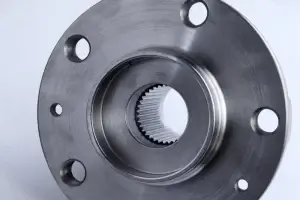
Torque considerations:
- Raised face flanges: Need accurate torque application to properly compress the gasket without causing damage.
- Flat face flanges: Torque must be evenly distributed to prevent warping or cracking of the flange, especially when dealing with brittle materials.
Best practices:
- Proper gasket compression requires precise torque to avoid damage.
- Follow manufacturer-recommended torque specifications.
- Ensure flanges are properly aligned before tightening bolts.
- Inspect gaskets and flanges for damage before installation.
Selecting the appropriate flange face type is essential for the integrity and efficiency of a piping system. Raised Face flanges are suitable for high-pressure, high-temperature applications, offering flexibility with various gasket types.
Flat Face flanges are ideal for low-pressure systems and connections involving brittle materials, providing a cost-effective and straightforward solution. Need help selecting the right flange? Contact our experts at Texas Flange today!