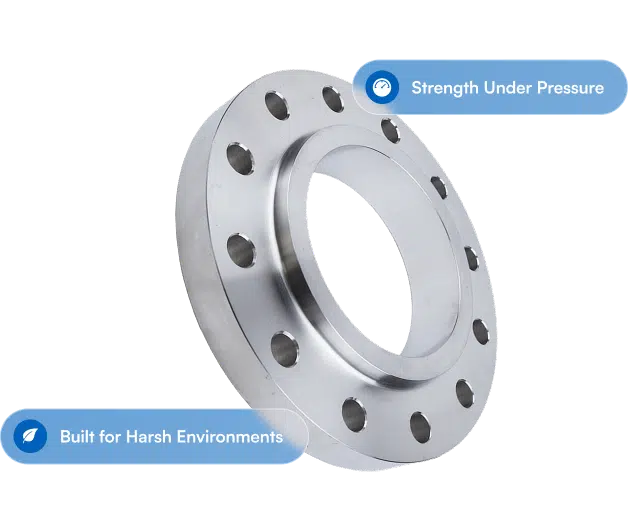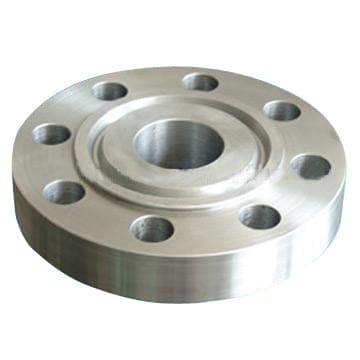
A ring joint gasket is a specialized sealing component used in high-pressure and high-temperature applications, primarily in the oil and gas, petrochemical, and power industries. These gaskets are designed to form a reliable seal between Ring Type Joint (RTJ) flanges and provide a secure connection in critical piping systems.
Available in various ring joint types, such as RTJ gaskets and ring gaskets, they ensure leak-proof seals that are essential for maintaining system integrity. Standards like API 6A govern the specifications and manufacturing of these gaskets, ensuring safety and performance in demanding conditions.
Relevance of the ring joint gasket
Ring type joint flange face surfaces are an increasingly popular option regarding flange connections. RTJ Flanges are a good alternative to raised face in certain applications. Typically, higher pressure and temperature projects use Ring Type Joints.
They provide a more effective sealing solution to media critical pipeline and pressure vessel infrastructure. Although only an option in ANSI/ASME class flanges, they are the required standard surface sealing in API specification flanges.
This is due to the fact that API flanges typically operate at a higher pressure in comparison to their ANSI/ASME flange counterparts.
The seal of an RTJ gasket occurs under the force of closing the bolt and hardware after mating one flange to another. Typically, the gaskets are made of softer material than the metal of the flanges they are sealing.
The most common of these materials is a soft iron. Slow and steady pressure on the hardware of the flange “crushes” the gasket within the ring joint surface. This helps to prevent any type of leakage during operation of the flange assembly.
Ring Type Joint gaskets are designated by an “R” number. R gaskets are available in oval type and octagonal configuration. Given the smooth sealing surface of ring joint faces, both configurations are virtually interchangeable.
When in doubt, higher pressure and temperature applications typically call for ring joint facings. When optimal surface sealing is necessary, ring gasket type joint flanges are the ideal choice.
Choosing the right ring joint gasket is crucial for ensuring a reliable, leak-free seal in high-pressure environments. Whether you’re working with RTJ flanges or other critical piping components, using the correct RTJ gasket can prevent costly failures and downtime.
Always ensure compliance with industry standards like API 6A when selecting ring gaskets for your applications to guarantee optimal performance and safety.
Give us a call at 281-484-8325 or shoot us an email at sales@texasflange.com with any questions or concerns on your order.
Don’t forget to check out our other free online resources!
FAQS
What is a ring joint gasket?
A ring joint gasket (RTJ gasket) is a precision-engineered metallic sealing component designed to ensure a high-integrity, leak-proof connection between RTJ flange faces. Commonly used in high-pressure and high-temperature applications across the oil and gas, petrochemical, and power generation industries, RTJ gaskets are specifically shaped to fit into a machined groove on the flange face. The seal is achieved through controlled deformation of the gasket material — typically softer than the flange metal – -when bolted, ensuring optimal performance under extreme conditions.
What are the different types of ring joint gaskets?
The two most common configurations of RTJ gaskets are oval and octagonal.
- Oval ring gaskets offer a traditional seal and are suitable for many standard applications.
- Octagonal ring gaskets provide improved sealing efficiency in higher-pressure systems due to their increased contact area and structural rigidity.
Both types are designed for compatibility with standard RTJ flanges, and in many cases, they can be used interchangeably, depending on the flange groove design.
How do I install a ring joint gasket?
To properly install an RTJ gasket:
- Inspect and clean the flange faces and ring grooves to remove any debris, scale, or damage.
- Insert the ring joint gasket into the groove, ensuring correct alignment.
- Tighten the flange bolts gradually and evenly in a crisscross pattern, using a calibrated torque wrench.
- Follow manufacturer torque specifications to avoid over-compression or uneven loading, which could compromise the seal.
A properly installed RTJ gasket will deform slightly to conform to the groove, forming a reliable metal-to-metal seal.
What standards govern ring joint gaskets?
RTJ gaskets are manufactured in accordance with several stringent industry standards to ensure quality and performance.
- API 6A: Specifies requirements for wellhead and Christmas tree equipment, including ring gaskets for high-pressure use.
- ASME B16.20: Covers metallic gaskets, including RTJ types, for use with flanges per ASME B16.5 and B16.47.
- ISO 10423 (API 6A equivalent): International standard for equipment used in oil and gas production.
Compliance with these standards guarantees dimensional accuracy, material integrity, and pressure-temperature performance essential for critical sealing environments.
Reviews