Stainless Steel is Tough, But Not Invincible: Handling, Galling, and Corrosion Prevention
The “Stainless” Myth
Let’s get one thing straight right off the bat: stainless steel flanges are workhorses. That’s why you spec them for chemical plants, offshore rigs, food processing, and anywhere else corrosion could turn into a nightmare. But here’s the thing, calling it “stainless” doesn’t mean it’s bulletproof.
We’ve seen it a hundred times. A contractor orders a beautiful stainless steel flange, installs it without a second thought, and six months later they’re staring at rust stains or, worse, a seized bolt that won’t budge without a cutting torch. The flange didn’t fail. The installation did.
Whether you’re working with a standard metal pipe flange for a water system or a specialized SST flange for a corrosive chemical application, understanding how stainless steel actually works, and where it can go wrong, will save you time, money, and a whole lot of frustration. Let’s dig into the two biggest culprits: galling and cross-contamination.
The Nightmare of Galling (Or: Why Your Bolt Just Became Part of the Flange)
If you’ve ever torqued down stainless steel bolts and felt them suddenly bind up, freeze, and then snap, congratulations, you’ve experienced galling. And if you haven’t, trust us, you don’t want to.
What Exactly is Galling?
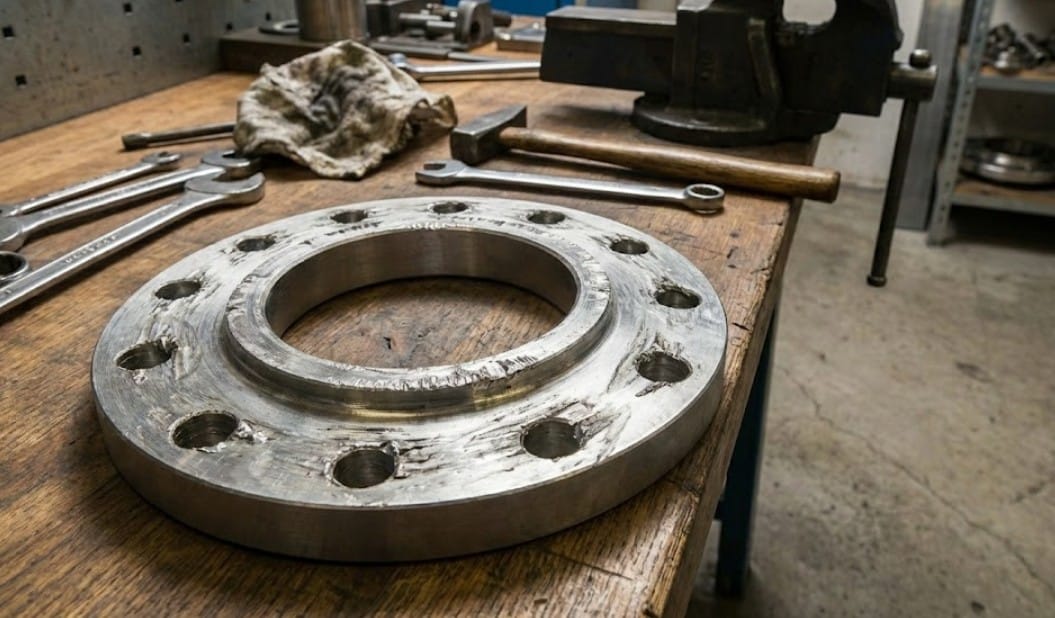
Galling is a form of cold welding that happens when two stainless steel surfaces rub together under pressure. The passive layer (we’ll get to that in a minute) gets scraped off, and the raw metal underneath starts to transfer from one surface to the other. Threads lock together, and suddenly your wrench won’t turn. Push harder, and the bolt shears off. Now you’re drilling out a seized ASTM A193/A194 fastener instead of finishing the job. Also important to remember: galling risk increases with higher preload / higher class flanges
This is the number one installation issue we hear about with stainless steel flange pipe connectors. It’s not a defect in the material, it’s physics. Stainless steel is softer and more prone to this than carbon steel, especially in grades like 304 and 316.
How to Prevent Galling
The good news? Galling is almost entirely preventable if you follow a few simple rules:
- Use anti-seize lubricant. Always. Nickel-based or copper-based compounds work best. A thin coat on the threads goes a long way.
- Go slow. Don’t run bolts down with an impact wrench. Slow, steady torque prevents heat buildup and thread friction.
- Use proper torque specs. Over-torquing is a fast track to galling. Follow the manufacturer’s torque tables for your flange size and pressure class.
- Match materials carefully. If possible, avoid stainless-on-stainless contact. Using a different grade for the nut and bolt (like 316 nuts on 304 bolts) can reduce the risk.
Think of it like this: you wouldn’t crank down lug nuts on your truck without a torque wrench. Same principle applies when you’re bolting up a critical flange connection.
Cross-Contamination: Why is My Stainless Steel Rusting?
Here’s a question we get all the time: “I bought a stainless steel flange, and now it’s rusting. Did you sell me the wrong material?”
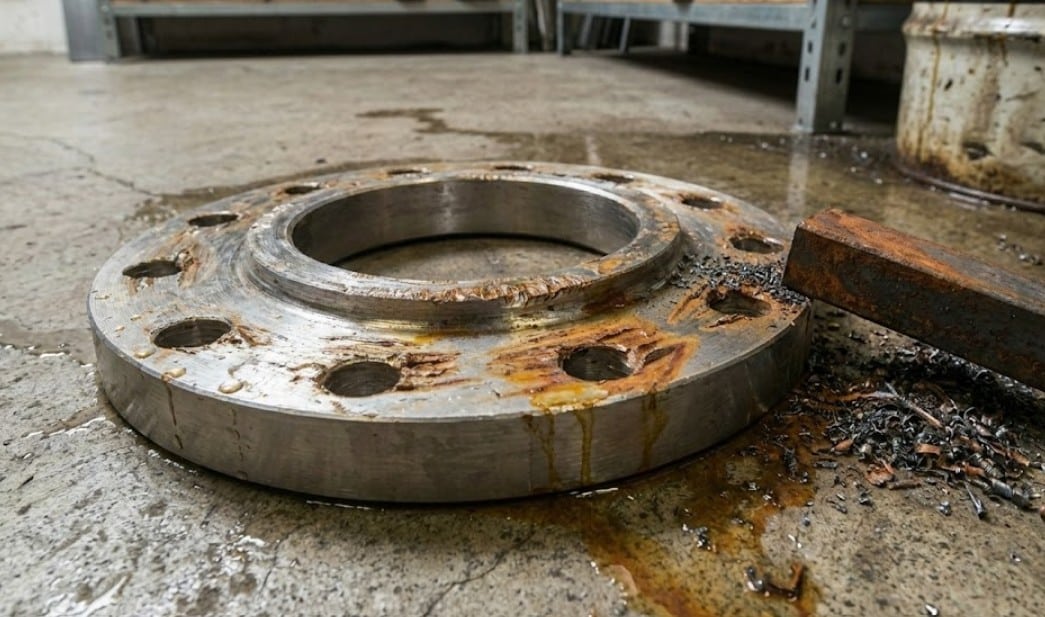
Short answer: No. Long answer: Your stainless isn’t rusting. The iron particles embedded in it are.
The Iron Particle Problem
Stainless steel doesn’t rust on its own under normal conditions. But it will absolutely show rust if you contaminate it with carbon steel particles. This happens more often than you’d think:
- Wire brushing with carbon steel brushes. You clean a weld or prepare a surface, and tiny particles get embedded in the stainless. Those particles rust, and it looks like the whole flange is corroding.
- Storage on carbon steel racks. Stack a fresh metal pipe flange on a rusty steel shelf, and you’re asking for trouble. Iron transfers to the stainless surface and oxidizes.
- Grinding or cutting nearby carbon steel. Sparks and grinding dust settle on stainless surfaces. Same problem.
The fix? Use dedicated stainless steel brushes and tools. Store stainless flanges on wooden pallets, plastic racks, or stainless racks. Keep your work area clean, and separate your carbon steel and stainless operations.
Surface Rust vs. True Corrosion
Not all discoloration is created equal. Surface rust from contamination can often be cleaned off with a mild acid wash or stainless steel cleaner. True pitting corrosion, where the base metal is actually degrading, is a different beast. If you’re seeing pits or deep corrosion, you’ve got an environment or material selection issue.
The Passive Layer: Stainless Steel’s Secret Weapon
Okay, let’s get a little technical for a minute, but we promise it’s worth it.
What is the Passive Layer?
Stainless steel’s corrosion resistance comes from a thin, invisible layer of chromium oxide that forms on the surface. This passive layer is self-healing. Scratch it, and as long as there’s oxygen around, it reforms. Pretty cool, right?
This layer is why a stainless steel flange can sit in a chemical plant for decades without rotting out. But it’s not invincible. Chlorides (like salt water), acids, and embedded iron particles can break it down faster than it can heal.
304 vs. 316: Know Your Grades
- 304 Stainless: Great general-purpose alloy. Good corrosion resistance in most environments, but chlorides will eventually get to it. Don’t use it for seawater or heavy salt exposure.
- 316 Stainless: Contains molybdenum, which makes it much more resistant to chlorides and acidic environments. This is your go-to for offshore, marine, or chemical applications.
If you’re specifying a sst flange for a coastal or high-chloride environment, 316 is worth the extra cost. For food processing, pharmaceuticals, or general industrial use, 304 is usually fine.
Passivation: A Factory Finish
Many stainless flanges are passivated at the factory, treated with a mild acid to remove any surface contaminants and enhance the passive layer. If you’re welding or machining a flange in the field, you might need to re-passivate it. A citric acid or nitric acid solution does the trick, but follow proper procedures and safety protocols.
Relevance to Flanges: Protecting Your Investment
Alright, enough theory. Let’s talk about how this applies to the actual flange pipe connector sitting on your jobsite.
Proper Storage
Don’t underestimate this. We’ve seen brand-new flanges arrive at a site, get tossed in the dirt, and develop surface rust within days. Here’s how to store them right:
- Keep flanges off the ground. Use pallets, racks, or crates.
- Avoid contact with carbon steel. That includes tools, shelving, and other materials.
- Cover them if they’re going to sit outside. Rain and humidity won’t hurt stainless, but combined with dirt and contaminants, you’re asking for issues.
Even smaller components like 112 pipe fittings (1-1/2″ fittings) need care. Just because they’re small doesn’t mean they’re less susceptible to contamination.
Bolting Techniques for Metal Pipe Flanges
We’ve already covered galling, but it’s worth repeating: proper bolting is critical. Here’s a quick checklist:
- Clean the flange faces. Remove any dirt, old gasket material, or debris.
- Use new gaskets rated for your service conditions.
- Apply anti-seize to all bolt threads.
- Torque in a star pattern to ensure even gasket compression.
- Don’t exceed the recommended torque. More isn’t better.
A properly installed flange connection can last decades. A rushed one can fail in months.
Material Certificates (MTRs)
When you order a stainless steel flange from Texas Flange, you should receive a Material Test Report (MTR) that certifies the grade, heat number, and chemical composition. This isn’t just paperwork, it’s proof that you’re getting the material you paid for.
If you’re in a critical application (pressure vessels, chemical processing, food-grade systems), don’t skip this step. Verify the MTR matches your specs, and keep it on file for inspections and audits.
Common Mistakes That Lead to Premature Failure
Let’s call out the usual suspects:
- Using the wrong tools. Carbon steel brushes, contaminated rags, or grinding wheels used on other metals can all introduce contaminants.
- Over-torquing fasteners. More torque doesn’t mean a better seal. It means galled threads and potential flange distortion.
- Assuming “stainless” means “maintenance-free.” Even the best stainless steel flange needs occasional inspection and cleaning, especially in harsh environments.
- Ignoring environmental factors. If you’re near the ocean, in a chemical plant, or dealing with high temperatures, material selection matters. Don’t cheap out on the wrong grade.
We get it, deadlines are tight, budgets are tighter, and sometimes corners get cut. But the cost of a failed flange (downtime, repairs, safety risks) far outweighs the cost of doing it right the first time.
Conclusion: A Little Care Goes a Long Way
Stainless steel is an incredible material. It’s tough, versatile, and corrosion-resistant. But it’s not magic, and it’s not indestructible. Galling, cross-contamination, and environmental exposure can all shorten the life of even the best metal pipe flange if you’re not careful.
The good news? Almost all of these issues are preventable with proper handling, installation, and maintenance. Use the right lubricants. Keep your tools and storage areas clean. Follow torque specs. Choose the right grade for your application. Do these things, and your stainless steel flange will perform exactly as it’s supposed to, for years, if not decades.
At the end of the day, we want your project to succeed. Whether you’re installing a single flange pipe connector or outfitting an entire facility with sst flanges, a little knowledge and a little care make all the difference.
Ready to Spec the Right Flange?
Whether you need help selecting the right grade of stainless steel flange, sourcing specific sizes like 112 pipe fittings, or just want to talk through your application with someone who knows the material inside and out, Texas Flange is here to help.
We stock a wide range of metal pipe flanges in 304, 316, and specialty alloys. Every flange ships with full material traceability and certifications. And if you’ve got questions, about galling, passivation, torque specs, or anything else, our team is just a phone call away.
Contact Texas Flange today. Let’s make sure your next installation is done right the first time.