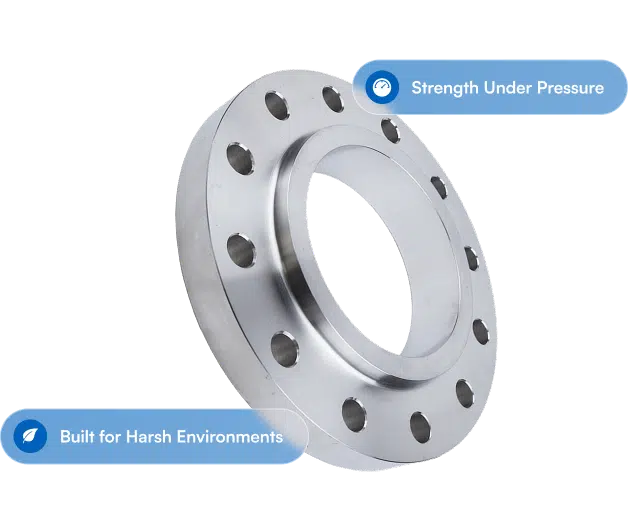
Stainless Steel vs. Titanium flanges are an essential component in many industrial applications, serving as connectors for pipes, valves, and other equipment.
Key differences
Among the various materials used to manufacture flanges, Stainless Steel vs. Titanium Flanges stand out for their strength, resistance, and durability. When it comes to choosing between stainless steel and titanium flanges, durability is often a key concern.
Corrosion resistance
Corrosion resistance is one of the most critical factors in determining the durability of a flange. Stainless steel, especially grades like 304 and 316, offers good corrosion resistance due to its chromium content, which forms a passive oxide layer protecting it from rust.
However, in highly corrosive environments, such as marine applications or chemical processing plants, stainless steel can still be susceptible to pitting and crevice corrosion, particularly in chloride-rich conditions.
Titanium, on the other hand, is known for its exceptional corrosion resistance. Its natural oxide layer is more robust than that of stainless steel, making it almost completely immune to corrosion in most environments. This makes titanium flanges a preferred choice for applications involving seawater, strong acids, and high-temperature oxidizing conditions.
Mechanical strength and wear resistance
Durability is also influenced by mechanical strength and resistance to wear. Stainless steel is a strong and tough material, with excellent tensile strength, making it suitable for high-pressure applications. The mechanical properties of stainless steel flanges depend on the specific grade used, with some grades offering enhanced strength and resistance to mechanical stress.
Titanium is significantly lighter than stainless steel while maintaining impressive strength. Although its tensile strength is comparable to that of stainless steel, titanium flanges offer a higher strength-to-weight ratio, making them ideal for aerospace and other weight-sensitive applications.
Additionally, titanium’s superior fatigue resistance makes it an excellent choice for applications where the flange is subjected to constant stress and pressure fluctuations.
Longevity in different environments
The longevity of a flange depends on the operating environment. In less aggressive environments, stainless steel flanges can last for decades without significant deterioration. However, in environments with high salinity, extreme temperatures, or exposure to harsh chemicals, stainless steel may degrade faster, requiring more frequent maintenance or replacement.
Titanium flanges, due to their superior corrosion resistance and fatigue strength, tend to have a longer lifespan even in challenging conditions. Their ability to withstand harsh environments with minimal degradation makes them a cost-effective choice in the long run, despite their higher initial cost.
Cost considerations
While durability is crucial, cost is also an important factor in selecting the right flange material. Stainless steel flanges are generally more affordable than titanium flanges, making them a popular choice for standard industrial applications. The widespread availability of stainless steel also contributes to its cost-effectiveness.
Titanium flanges, on the other hand, come with a higher upfront cost due to the challenges involved in processing and manufacturing titanium. However, their extended lifespan and minimal maintenance requirements can offset the initial investment over time, especially in industries where corrosion-related failures are costly.
Which one is more durable?
When comparing Stainless Steel vs. Titanium Flanges, titanium emerges as the more durable option in terms of corrosion resistance, longevity, and fatigue strength. However, stainless steel flanges remain a reliable and cost-effective choice for many industrial applications, especially in environments where corrosion resistance is not a primary concern.
Ultimately, the decision between stainless steel and titanium flanges should be based on the specific demands of the application, including environmental conditions, mechanical requirements, and budget considerations.
Find the best flanges at Texas Flange
Choosing the right flange material is critical for ensuring long-term performance and cost-effectiveness. At Texas Flange, we offer a wide selection of high-quality stainless steel and titanium flanges to meet the diverse needs of industries ranging from oil and gas to aerospace.
Our expert team can help you determine the best material for your specific application of Stainless Steel vs. Titanium Flanges, ensuring durability and reliability. Contact Texas Flange today to explore our products and find the perfect flange solution for your project.
FAQ’s
What is the difference between Stainless Steel and Titanium Flanges?
Stainless steel flanges are corrosion-resistant and versatile, making them ideal for most industrial applications. Titanium flanges offer superior strength, corrosion resistance, and are more suitable for extreme environments, such as high heat or aggressive chemicals.
When should I use Titanium flanges instead of Stainless Steel flanges?
Titanium flanges are preferred in highly corrosive environments or applications requiring high strength-to-weight ratios, such as in aerospace or chemical processing, while stainless steel flanges are suitable for general-purpose applications with moderate corrosion risk.