A Different Kind of Challenge
Look, we get it. If you work with high-pressure steam or petroleum systems, carbon steel is your bread and butter. It’s tough, it welds clean, and it can take a beating. But when thermal conductivity matters, when you’re running chilled water for HVAC, hot water for process heating, or refrigerant lines, copper is king.
Here’s the thing, though: flanging copper pipe isn’t just “welding steel, but softer.” It’s a completely different animal. Copper doesn’t like the same heat levels, it behaves differently under pressure, and if you bolt it to the wrong material, you’re setting yourself up for a corrosion nightmare that’ll have you explaining to management why that three-month-old connection is weeping green crud.
We’ve flanged thousands of systems over the years, and we’ve seen both the beautiful work and the costly mistakes. This guide will walk you through the proper techniques for creating reliable copper flange connections, the kind that pass inspection and don’t get you called back at 2 AM.
The Van Stone System: Why We Don’t Use Solid Copper Flanges
Here’s something that surprises people new to copper piping: in industrial applications, we almost never use a one-piece solid copper flange welded directly to the pipe. Why? Because copper is expensive, and a solid flange wastes a lot of material on a part that doesn’t need copper’s thermal properties.
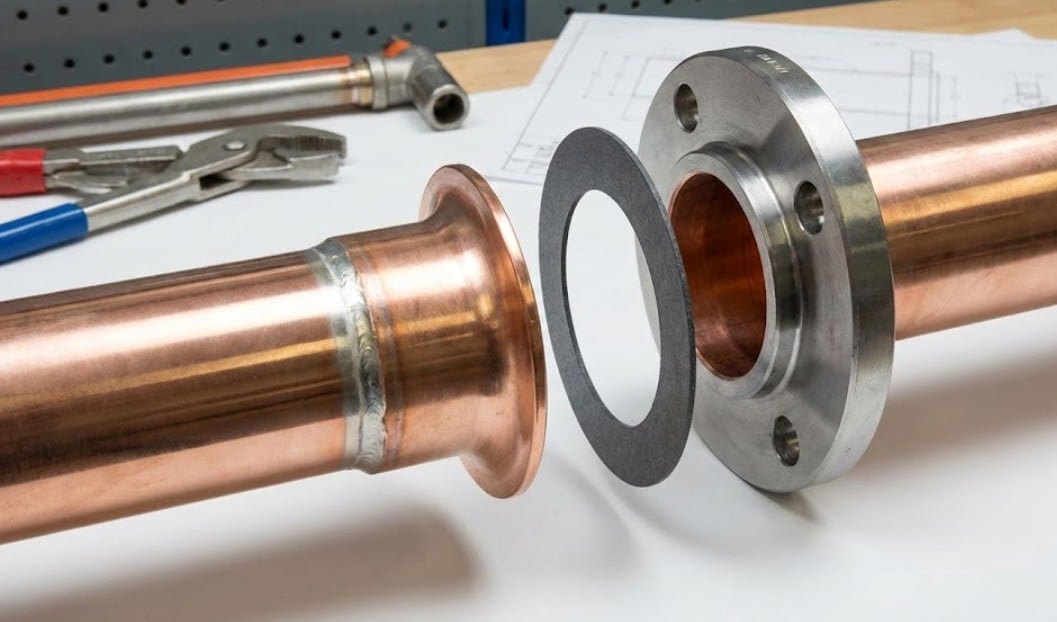
Instead, the industry standard is the lap joint system (sometimes called a “Van Stone” arrangement). Here’s how it works:
The Two-Piece Setup:
-
A copper stub end gets brazed directly to your copper pipe. This is a short flange-faced piece that provides the sealing surface.
-
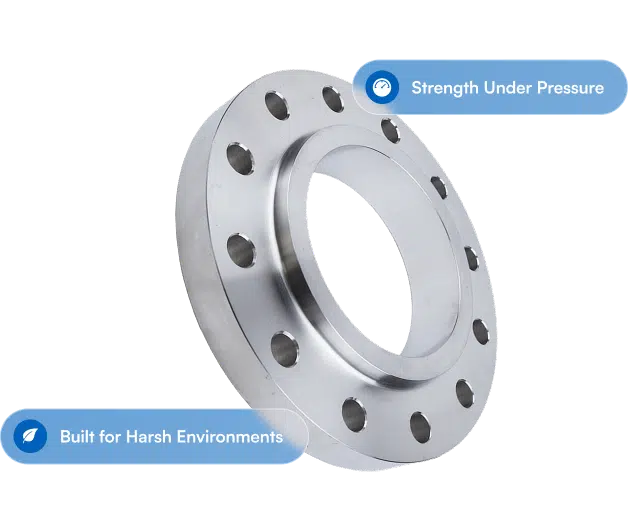
A loose backing flange (usually carbon steel, stainless steel, or occasionally galvanized) slides over the stub end from behind and provides the bolt holes.
Think of it like this: the stub end is doing the sealing work where copper’s properties matter, and the backing flange is just there to hold everything together mechanically.
Why This System Makes Sense:
-
Cost savings: You’re using maybe 6 inches of copper flanged pipe instead of a heavy solid flange
-
Bolt alignment: The backing flange can rotate freely, so lining up your bolt holes is easy, no fighting with a fixed-position weld
-
Flexibility: You can use standard steel lap joint flanges you already stock
-
Easier assembly: Field installers can adjust the stub end position slightly during fit-up
This is the setup you’ll see in commercial HVAC systems, pharmaceutical process piping, and anywhere else copper runs at industrial scale.
Brazing vs. Soldering: Know the Difference
If you’re coming from residential plumbing, you might think “soldering” when you hear copper pipe. But for a proper copper pipe flange connection that’ll hold up to industrial pressures and thermal cycling, you need to understand the difference.
Soft Solder (Plumbing Solder)
-
Melts around 400-450°F
-
Typical tensile strength: 5,000-8,000 PSI
-
Fine for residential water lines at 80 PSI
-
Not suitable for most industrial flange applications
Brazing (Silver Solder)
-
Melts around 1,100-1,500°F depending on alloy
-
Tensile strength: 40,000+ PSI
-
Required for systems over 100 PSI or with thermal cycling
-
Creates a true metallurgical bond
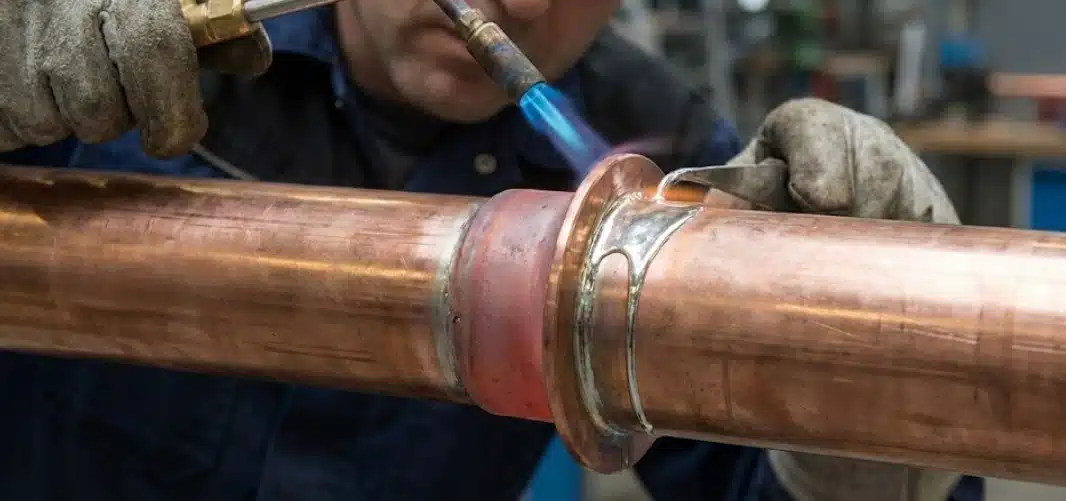
For attaching a stub end to copper pipe, you’re almost always brazing. The joint needs to handle not just pressure, but also the mechanical stress of bolt loading and thermal expansion.
The Brazing Process
Here’s what a proper braze looks like:
-
Clean everything: Wire brush or emery cloth on both the pipe and stub end. No oxidation, no oil.
-
Apply flux: Use the right flux for your brazing alloy temperature range.
-
Assemble and heat: Heat the joint evenly with a torch, copper conducts heat so well you need to move around the joint.
-
Watch for capillary action: When the base metal reaches temperature, the brazing rod will flow into the gap by capillary action. You’ll see it wick around the joint.
-
Let it cool naturally: Don’t quench copper. Let it air cool to avoid stressing the metal.
The beauty of brazing is that the filler metal actually flows into the microscopic gaps between the pieces, creating a bond that’s often stronger than the parent metal.
Threaded Adapters: The Lower-Pressure Alternative
Not every copper line needs the full industrial treatment. For lower-pressure applications (think 150 PSI and under with minimal thermal cycling), you’ve got another option: the flange adapter.
This setup uses:
-
A male threaded copper adapter sweated or brazed onto your copper pipe
-
A threaded flange (typically bronze, brass, or stainless steel) screwed onto that adapter
When to Use Threaded Adapters:
-
Smaller line sizes (typically 2″ and under)
-
Domestic water systems
-
Low-pressure HVAC drains and vents
-
Applications where you might need to disassemble occasionally
Important note: Use pipe dope or thread tape rated for your media. And remember, the threads themselves aren’t the pressure seal in a flange connection; that’s what the gasket is for. The threads just hold the mechanical connection together.
For metal pipe flange applications where you need to connect copper to standard flanged equipment, a quality bronze threaded flange can be your friend. Just make sure you’re not exceeding the pressure rating of the threaded connection.
The Galvanic Corrosion Trap: Don’t Let Chemistry Bite You
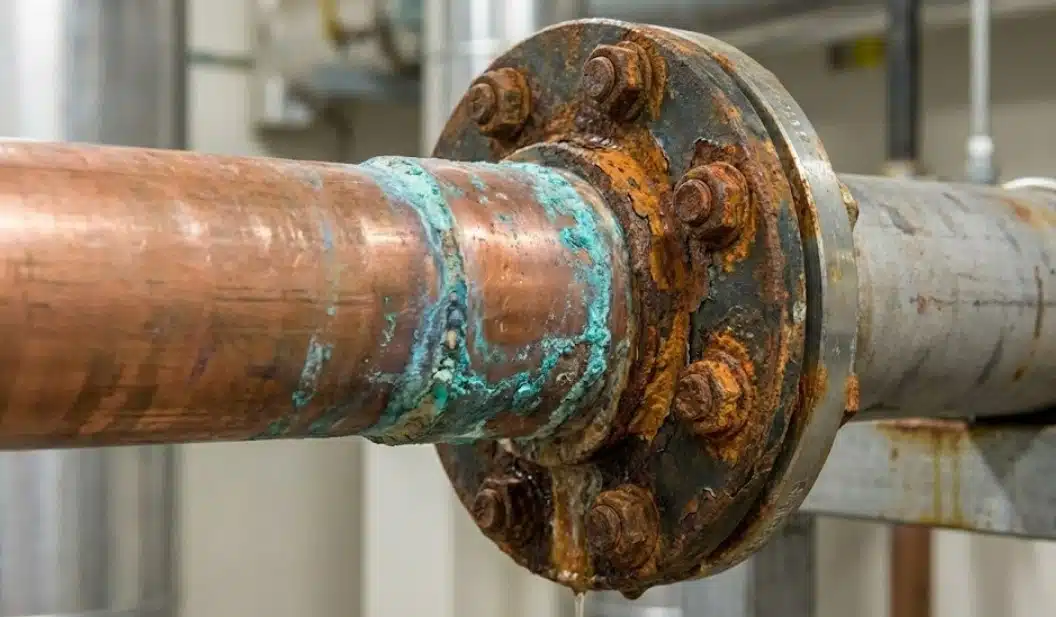
This is where we see even experienced installers get burned. You can make a perfect braze, torque everything to spec, and still end up with a failed joint in six months. Why? Galvanic corrosion.
The Problem
Copper and carbon steel have different positions on the galvanic series. When you bolt them directly together in the presence of an electrolyte (like water, condensation, or even humid air), you’ve created a battery. Current flows, and the more anodic metal (usually the steel) corrodes preferentially.
We’ve seen backing flanges on copper stub ends develop crusty corrosion, weeping connections, and in extreme cases, through-wall failures on the steel flange. It’s not pretty, and it’s expensive to fix.
The Solution: Isolation
You need to break the electrical contact between dissimilar metals:
Isolation Gaskets:
-
Full-face phenolic or rubber-bonded gaskets that prevent metal-to-metal contact between flange faces
Insulating Sleeves:
-
Non-conductive sleeves that go around each bolt, preventing the bolt from touching both flanges
Isolation Kits:
-
Complete packages with gaskets, sleeves, and washers for total isolation
Alternative: Match Your Materials:
-
Use stainless steel lap joint flanges instead of carbon steel
-
Use galvanized backing flanges in corrosive environments
-
Consider bronze or brass flanges for smaller sizes
In HVAC piping especially, where you’ve got condensation and temperature swings, galvanic isolation isn’t optional, it’s mandatory if you want your copper flange connections to last.
How Texas Flange Fits Into Your Copper System
Here’s where we come in. While we don’t manufacture the copper stub ends themselves (those typically come from copper pipe suppliers), we provide the critical backing flanges that make the lap joint system work.
What We Supply for Copper Systems:
Lap Joint Flanges (Van Stone Flanges):
-
Carbon steel, stainless steel (304/316), and galvanized options
-
Class 150 and Class 300 ratings
-
Sizes from ½” through 24″ and larger
-
The loose backing flange in your copper stub end assembly
Blind Flanges:
-
For capping copper lines during testing or maintenance
-
Match your highest alloy material to avoid corrosion issues
Stainless and Specialty Flanges:
-
When you need corrosion resistance or galvanic compatibility
-
Custom drilling patterns available
Threaded Flanges:
-
Threaded flanges in bronze, stainless, and other materials
-
Reducing flanges when you’re transitioning sizes
We ship from large repositories of stock in Texas and other states. Light enough parts are able to go Next Day Air when required. So the next time you’re in the middle of a project and discover you need half a dozen 6” lap joint flanges in 316/L, you know who to call.
Making the Right Choice
When you call us about a copper system, here’s what we need to know:
-
Pipe size and wall thickness
-
Preferred connection type
-
Operating pressure and temperature
-
What the system is carrying (water, refrigerant, chemicals)
-
What the mating flange is made of
-
Indoor or outdoor installation
With that information, we can provide data about whether you need carbon steel with isolation, stainless steel, or a specialty material. We’ve seen too many jobs where someone saved $50 on flanges and spent $5,000 on early replacement.
Common Mistakes (and How to Avoid Them)
After years in this business, we’ve seen the same errors pop up repeatedly. Here’s your cheat sheet for what not to do:
Mistake #1: Overheating the Pipe
-
The Problem: Copper anneals (softens) when heated too much. If you keep the torch on it too long during brazing, you’ll end up with soft pipe that can’t handle pressure or bolt loads properly.
-
The Fix: Use a proper brazing torch, heat evenly and quickly, and remove heat as soon as the brazing rod flows. Practice your technique on scrap if you’re new to it.
Mistake #2: Mismatching Flange Classes
-
The Problem: Most copper fittings follow Class 125 bronze flange dimensions, which usually match Class 150 steel flanges, but not always, especially in larger sizes or Class 300/250 comparisons.
-
The Fix: Verify your bolt circle diameter and number of holes before you start cutting pipe. Don’t assume compatibility.
Mistake #3: Forgetting the Gasket (Yes, Really)
-
The Problem: Someone gets focused on the perfect braze and forgets that the flange face still needs a gasket. We’ve had calls from job sites where they torqued everything down and wondered why it was leaking.
-
The Fix: Use the appropriate gasket for your media and pressure, usually a full-face rubber or fiber gasket for copper systems. And if you’re isolating for galvanic corrosion, make sure that gasket is non-conductive.
Mistake #4: Ignoring Thermal Expansion
-
The Problem: Copper expands about 50% more than carbon steel when heated. If you don’t account for this in your system design, you’ll get stress at the flange connections.
-
The Fix: Use expansion loops, flexible connections, or anchoring strategies appropriate for your temperature range. This is system design, not just flange connection, but it affects your flanges.
Conclusion: A Gentle Hand and a Strong Plan
Flanging copper pipe isn’t difficult, it’s just different. You need to respect the material’s properties: its thermal conductivity, its softness compared to steel, and its tendency to corrode when coupled with dissimilar metals.
The lap joint system with stub ends and backing flanges gives you a cost-effective, reliable connection that’s been the industrial standard for decades. Proper brazing creates joints that’ll outlast the equipment they’re connected to. And understanding galvanic corrosion means your installations will still look good five years from now, not just at final inspection.
Whether you’re running chilled water for a data center, hot water for a pharmaceutical process, or refrigerant lines for industrial cooling, the same principles apply: clean prep work, proper brazing technique, material compatibility, and the right backing flanges for your application.
It’s a soft metal, sure. But treated with the right technique, it’s as reliable as anything in your facility.
Ready to Spec Your Copper System Flanges?
At Texas Flange, we’ve been supplying the backing flanges, blind flanges, and specialty materials that make copper systems work since day one. Whether you need a single lap joint flange for a repair job or you’re outfitting an entire HVAC system with stainless steel flanges and isolation kits, we’ve got the inventory and the expertise to get you the right parts.
Our team understands the challenges of working with copper in industrial environments. We know which materials play nice together, what pressure ratings you actually need (not just what sounds impressive), and how to get components to your job site when you need them.
Contact Texas Flange today:
- Talk to a real person who understands flanged connections
- Get accurate quotes on lap joint flanges, blind flanges, and adapters
- Custom drilling and specialty materials available
- Fast shipping from our Texas facility
Don’t let a $50 flange selection mistake turn into a $5,000 repair call. Let’s get your copper system flanged right the first time.
Call us, email us, or visit our website. We’re here to help you build systems that last.