Thread Wars: The Critical Differences Between NPT and BSPT Connections
When Thread Type Makes or Breaks Your Project
Look, we get it; when you think of Texas Flange, you pretty much just think of weld flanges… weld necks, slip-ons, blinds, the whole lineup. That’s our bread and butter, and we’re proud of it. But there is another critical component in some your piping systems that doesn’t get enough discussion since it’s not welded at all: the threaded connection. Whether you are using a threaded flange as a companion to a valve or screwing a nipple into a blind flange, getting thes threads right (NPT or BSPT) is the difference between a secure seal and a leaking nightmare. And that’s where things get interesting, or frustrating, depending on whether you spec’d the right thread type.
In the industrial piping world, two standards dominate the threaded connection landscape: NPT (National Pipe Taper) and BSPT (British Standard Pipe Taper). They’re the heavyweights, the standards everyone has to deal with, and the source of more headaches than we can count when someone tries to force a round peg into a square hole (or in this case, a 60-degree thread into a 55-degree thread).
Let’s break down what makes these two standards different, why both exist, and, most importantly, why getting it right on your flange order matters more than you might think.
What is NPT? (National Pipe Taper)
NPT is the undisputed king of threaded pipe connections in North America. If you’re working on a project in the United States or Canada, chances are overwhelming that you’re dealing with NPT threads. It’s everywhere, from the smallest instrument connections to larger industrial piping systems.
How NPT Works
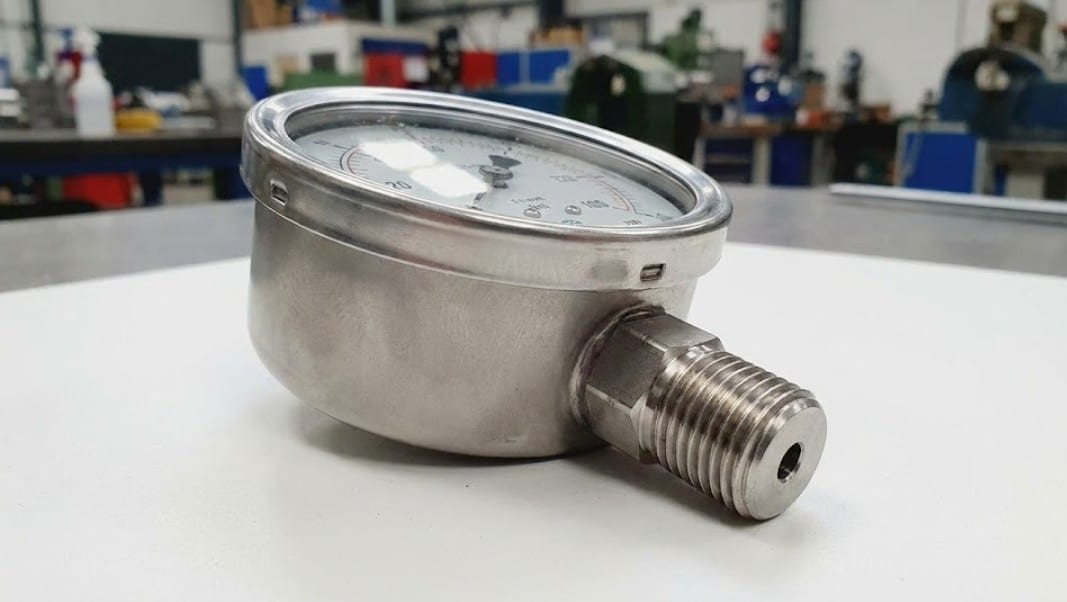
The “taper” in National Pipe Taper isn’t just for show. NPT threads are cut on a taper of 1 inch per foot (or about 1° 47′), which means the diameter gradually decreases along the length of the thread. This taper is the secret sauce that makes NPT connections seal.
Here’s what sets NPT apart technically:
- Thread angle: 60 degrees (measured between the flanks of the thread)
- Thread shape: Flattened peaks and valleys (also called crests and roots)
- Sealing mechanism: Interference fit created by the taper, usually enhanced with pipe dope or PTFE tape
When you thread an NPT male fitting into an NPT female fitting, that taper creates an interference fit, the threads wedge together tighter and tighter as you screw them in. Add some quality thread sealant into the mix, and you’ve got a connection that can hold pressure and keep fluids where they belong.
The flattened peaks and valleys give you more surface contact area, which contributes to that metal-to-metal seal. It’s a robust system that’s proven itself across decades of industrial use.
What is BSPT? (British Standard Pipe Taper)
While NPT dominates North America, step outside those borders and you’ll quickly encounter BSPT. British Standard Pipe Taper is the standard across Europe, Asia, Australia, and most of the rest of the world. If you’re working on international projects or dealing with equipment manufactured overseas, BSPT is going to be part of your vocabulary.
How BSPT Works
BSPT operates on the same basic principle as NPT, a tapered thread that creates a seal through interference fit. But the devil, as they say, is in the details.
Here’s what defines BSPT:
- Thread angle: 55 degrees (based on the Whitworth thread form)
- Thread shape: Rounded peaks and valleys
- Sealing mechanism: Interference fit from the taper, plus sealant
- Taper rate: Also 1 inch per foot, same as NPT
That 55-degree angle is a legacy of Joseph Whitworth, the British engineer who standardized thread forms in the 1800s. The rounded profile of BSPT threads (often called Whitworth threads) gives them a different feel and fit compared to NPT’s flatter profile.
BSPT is just as capable as NPT at creating leak-free seals, it’s not better or worse, just different. And that difference matters a lot when you’re trying to connect components.
The Key Differences: Why Compatible Doesn’t Mean Interchangeable
Here’s where we need to get real for a minute. NPT and BSPT look similar at first glance. Both are tapered threads. Both seal the same way. You might even be able to start threading an NPT fitting into a BSPT port (or vice versa) and think everything’s fine.
It’s not fine, and we don’t take anything for granted in the flange world with pressure.
Side-by-Side Comparison
Let’s lay out the critical differences:
|
Feature |
NPT |
BSPT |
|
Thread Angle |
60° |
55° |
|
Thread Form |
Flattened peaks/valleys |
Rounded peaks/valleys |
|
Pitch |
Different for each size |
Different for each size (not matching NPT) |
|
Geographic Standard |
North America |
Europe, Asia, rest of world |
What Happens When You Mix Them
Let’s say you’ve got an NPT male fitting and a BSPT female port. You start threading them together. The first few threads might even catch, the tapers are similar enough that you’ll get some initial engagement.
But here’s what’s actually happening:
- Improper thread engagement: Those 60-degree threads aren’t mating properly with 55-degree threads
- Incomplete seal: The flattened NPT crests and rounded BSPT roots (or vice versa) aren’t making proper contact
- Stress concentration: You’re creating weak points and stress risers in both fittings
- Potential for failure: Under pressure, you’re looking at leaks, weeps, or catastrophic failure
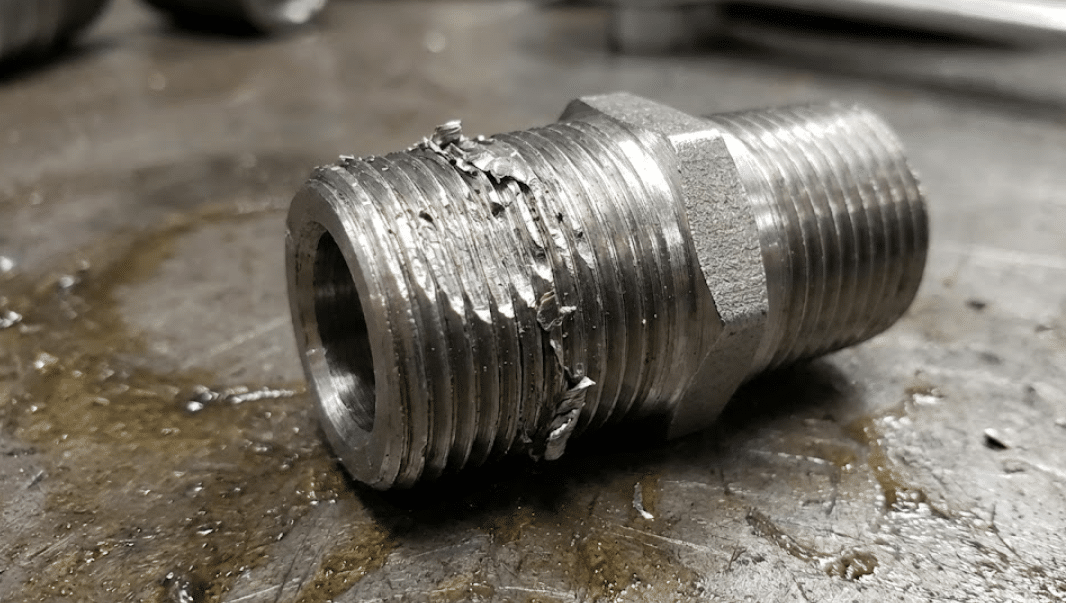
We’ve seen it happen. Someone forces the connection, maybe adds extra sealant to compensate, and calls it good. Then the system pressurizes and you’ve got a leak. Or worse, you’ve stripped threads trying to tighten it enough to seal, and now you’ve got ruined fittings and a delay while you source the correct parts.
The bottom line: NPT and BSPT are not interchangeable. Period. Don’t try to make them work together.
Geography & Industry: Why Two Standards?
You might be wondering why we’re stuck with two different standards in the first place. The answer, like most things in engineering, comes down to history and geography.
A Tale of Two Empires
Back in the industrial revolution, both the United States and Britain were developing their own manufacturing standards independently. The British developed the Whitworth thread system (including what would become BSPT) in the mid-1800s. The Americans developed their own systems, eventually standardizing on what we now call NPT.
By the time global trade and international projects became common, both standards were deeply entrenched in their respective manufacturing ecosystems. Tools, fittings, flanges, valves, everything was built to one standard or the other.
Where You’ll Encounter Each
Here’s the general breakdown:
NPT territory:
- United States and Canada (almost exclusively)
- Some Latin American projects with US influence
- Equipment manufactured in North America
- Instrumentation and control systems from US manufacturers
BSPT territory:
- Europe, UK, and Commonwealth countries
- Asia (China, Japan, India, Southeast Asia)
- Middle East
- Africa
- Australia and New Zealand
- Equipment from European or Asian manufacturers
If you’re working on international projects, you need to know which standard you’re dealing with. Check your specs, verify with your equipment suppliers, and make sure everyone’s on the same page before you start ordering companion flanges or threaded fittings. We are able to provide both, so check accordingly and let us know.
Relevance to Flanges: Why This Matters to Your Texas Flange Order
Alright, let’s bring this back home to what we do. At Texas Flange, we manufacture and distribute all kinds of flanges, and many of them involve threaded connections.
Where Thread Type Matters
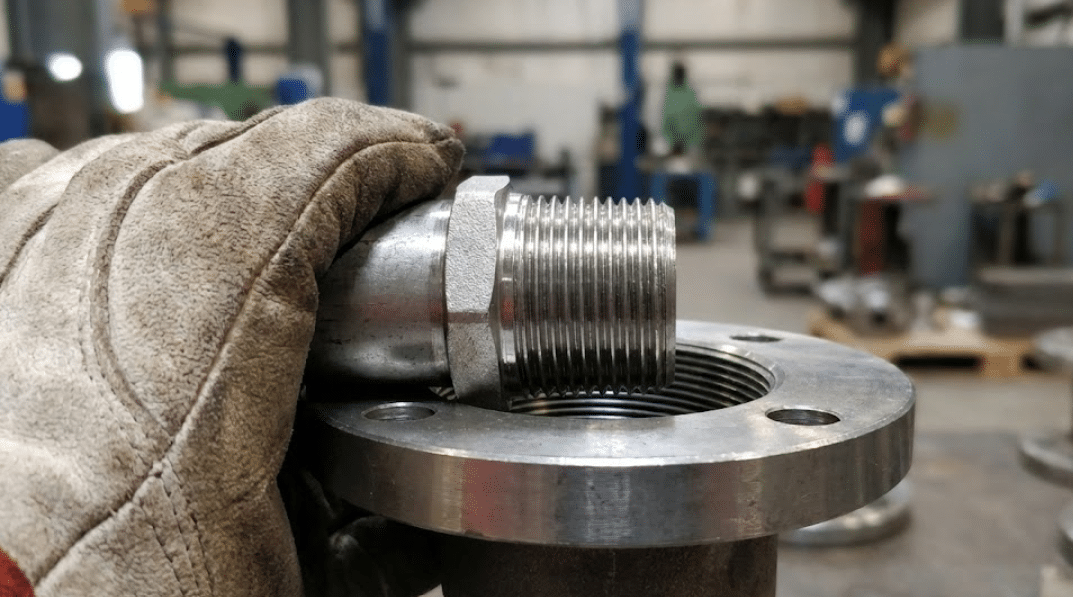
Threaded Flanges: These flanges have female pipe threads machined into the bore. They thread directly onto male-threaded pipe without welding. If you order an NPT threaded flange and your pipe is BSPT? You’re stuck.
Blind Flanges with Tapped Holes: Need a blind flange with threaded ports for instrumentation or drain connections? Those threads need to match whatever you’re screwing into them. NPT transmitter on a BSPT tapped hole won’t work.
Companion Flanges: When you’re mating up to equipment, pumps, valves, heat exchangers, the companion flange needs to match the equipment’s connection standard. European pump with BSPT threads? You need BSPT companion flanges.
The Cost of Getting It Wrong
Here’s what happens when the thread type is wrong:
- Project delays: You’ve got the flange, but it doesn’t fit. Now you’re waiting for the correct part to ship.
- Wasted material: That NPT flange you ordered? It’s scrap if you needed BSPT.
- Field modifications: Sometimes crews try to make it work. That’s when things get expensive and dangerous.
- System integrity: Even if you force a connection, you’ve compromised the leak-tight integrity of your system.
We’ve worked with customers who’ve caught thread mismatches before installation, and we’ve worked with customers who didn’t catch them until they were standing in the field with the wrong flanges. Trust us, you want to be in the first group.
How to Get It Right
When you’re ordering threaded flanges or companion flanges from us, here’s what we need to know:
- Thread type (NPT or BSPT, be explicit)
- Thread size
- Flange class and size
- Material specifications
- Any applicable standards (ASME, EN, etc.)
Don’t assume. If your spec sheet just says “threaded,” pick up the phone and call us. We’d rather spend five minutes clarifying the thread type than have you deal with delays because we made an assumption.
Conclusion: Know Your Specs, Avoid the Headaches
Look, NPT and BSPT are both excellent thread standards. They’ve each proven themselves across millions of installations worldwide. Neither is “better”, they’re just different, and they’re not compatible with each other.
The key takeaway? Know what you’re working with before you order.
Check your equipment specs. Verify what standard your project is using. If you’re dealing with international equipment or projects that cross borders, double-check everything. And when you’re ordering flanges, threaded, blind with tapped holes, or companions, make absolutely sure you’re specifying the correct thread type.
It’s one of those details that seems minor until it’s not. Until you’re standing in the field with a flange that won’t mate up, or you’re dealing with a leak because someone forced an incompatible connection.
We’re here to help you avoid those situations. Whether you’re working domestic with NPT or international with BSPT, we’ve got the flanges you need with the thread type you need.
Ready to Order? We’ve Got You Covered
Whether you need a standard NPT blind flange for a domestic project or a specialized BSPT threaded flange for international equipment, Texas Flange has the expertise and inventory to support your project.
Our team knows flanges inside and out, and we understand that the details matter. Thread type isn’t just a box to check, it’s a critical specification that affects the integrity and safety of your piping system.
Get in touch with us today:
- Need a quote on threaded or companion flanges? We’ll make sure you get the right thread type.
- Working on an international project and not sure which standard you need? We’ll help you figure it out.
- Got a rush job and need flanges fast? We’ve got the inventory and the logistics to make it happen.
Don’t let thread compatibility become your problem. Let Texas Flange handle the details so you can focus on getting your project done right, on time, and leak-free.
Contact Texas Flange today, because when it comes to flanges and threaded connections, getting it right the first time isn’t just good practice. It’s the only practice.