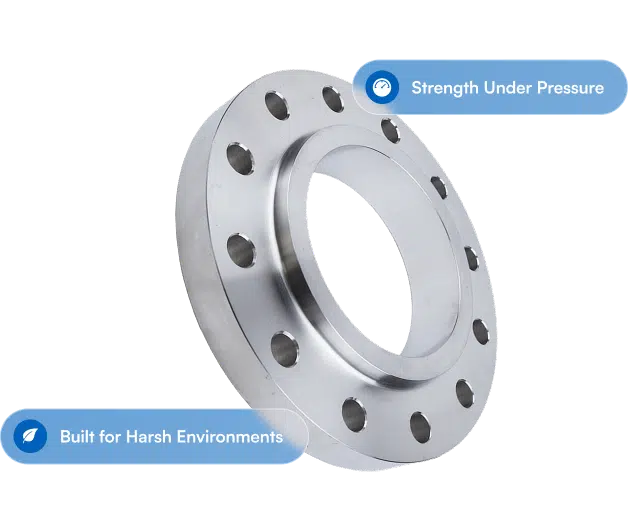
Selecting the right flange for your piping system is not just about convenience—it impacts durability, safety, and overall operational efficiency. Understanding weld neck flange vs slip on differences is critical for making informed decisions. From strength and installation to cost and industry applications, this guide will walk you through everything you need to know.
What Is a Weld Neck Flange?
A weld neck flange is distinguished by its long, tapered hub, which allows stress to be distributed smoothly from the flange to the pipe. This design reduces stress concentrations and ensures high structural integrity, making it ideal for high-pressure and high-temperature applications.
Key features of weld neck flanges include:
- Reinforced connection that withstands high loads
- Full penetration weld for maximum safety and reliability
- Excellent for large and small orders requiring precision
- Suitable for critical pipelines where system failure is not an option
For technical specifications and options, check Weld Neck Flanges.
What Is a Slip On Flange?
A slip on flange slides over the pipe and is welded both inside and outside, creating a mechanical seal. It’s simpler to install than a weld neck flange and is typically used in low to medium pressure systems.
Benefits of slip on flanges include:
- Quick and easy installation
- Lower initial cost compared to weld neck flanges
- Flexibility for small and medium pipelines
- Adequate for systems where high stress and critical loads are not a concern
Explore the full range of options at Slip On Flanges.

Key Differences: Weld Neck vs Slip On
When comparing weld neck flange vs slip on, several technical factors must be considered:
Strength and Durability
- Weld neck flange provides superior strength and long-term reliability, especially under high pressure or extreme temperatures.
- Slip on flange vs weld neck is suitable for low-stress environments, but it will not withstand the same pressure and mechanical demands.
Installation Process
- Weld neck flanges require precise alignment and full penetration welding. While installation takes more time, it ensures the system remains robust and leak-free.
- Slip on flanges are easier to install, particularly for replacements or low-pressure lines. However, frequent inspections may be needed in demanding applications.
Cost Considerations
- Weld neck flange vs slip on flange generally costs more upfront due to materials, labor, and installation requirements. The higher initial investment pays off by reducing maintenance and replacement costs.
Slip on flanges are more affordable initially, but long-term operational costs may increase due to lower durability.
Industry Applications
Understanding slip on flange vs weld neck flange ensures the right choice for your application:
- Weld neck flanges: Oil & gas pipelines, chemical plants, high-pressure boilers, power generation facilities, and critical industrial systems.
- Slip on flanges: Water treatment plants, HVAC systems, low-pressure manufacturing pipelines, and temporary setups where quick assembly is essential.
Selecting the appropriate flange type ensures your specifications are met while keeping systems safe and efficient.
Pros and Cons Summary
Here’s a quick overview:
- Weld Neck Flange:
- ✅ High strength and durability
- ✅ Suitable for high-pressure and critical systems
- ❌ Higher installation cost
- Slip On Flange:
- ✅ Fast installation and lower upfront cost
- ✅ Ideal for low to medium-pressure applications
❌ Less durable under high stress

Installation Guide: Step by Step
Whether you choose weld neck flange vs slip on, proper installation is key:
- Verify your specifications: Determine pressure, diameter, and material.
- Select the correct standard: Follow ASME/ANSI, or design your own dimensions and check with an engineer to run calculations.
- Prepare surfaces: Ensure flanges or pipes are clean and free from damage.
- Assemble components: For weld neck, align and perform full penetration weld; for slip on, slide the flange over the pipe and weld inside and outside.
- Test the system: Pressurize carefully to confirm no leaks.
Following these steps prevents common mistakes like getting a slip-on instead of a socket weld or improper torque application.
⚙️ Find the Perfect Flange for Your System with Confidence
Choosing between weld neck flange vs slip on is about evaluating pressure requirements, system criticality, and long-term maintenance. Both types have their applications, but understanding slip on flange vs weld neck ensures you select the best option for your specifications.
For high-quality components and customer-focused solutions, visit Texas Flange or contact our team at Contact Us 📩 for expert guidance on large and small orders.