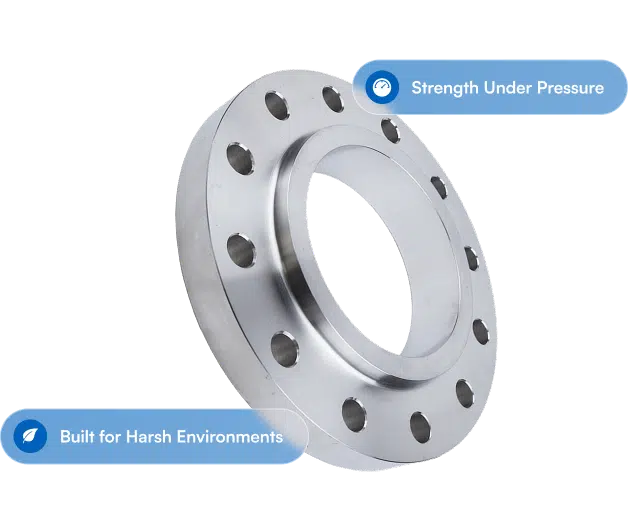
Stainless Steel Flanges
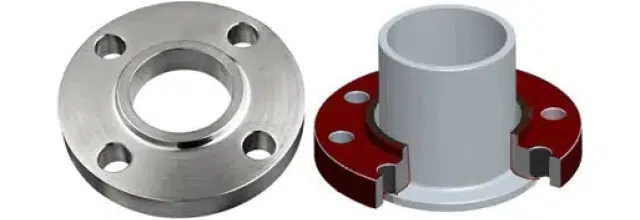
304/304L – Dual Grade
This is the most common grade of flanged stainless steel fittings. 18% Cr, 8% Ni, nonmagnetic. We provide dual grade material that has the weldability that low carbon content improves as well as the higher rating of straight 304.
Do note that in high temperature applications (over 800° F), 304H would be recommended.
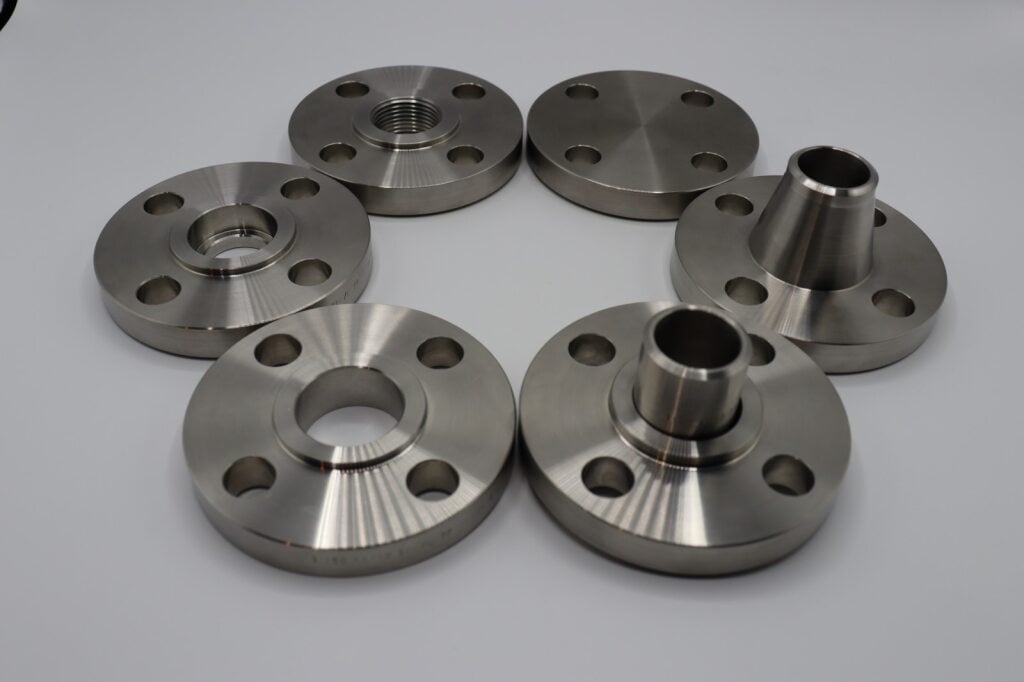
316/316/L – Dual Grade
This is the most common grade of stainless steel flange after 304/L, though due to certain industry demands, 316/L may be more readily available. 18% Cr, a minimum of 10% Ni, with Molybdenum added, 316 provides superior corrosion resistance compared to 304.
We provide dual grade material that has the weldability that low carbon content improves as well as the higher rating of straight 316. Do note that in high temperature applications (over 800° F), 316H would be recommended.
304H – UNS S30409
A high carbon variant of the most commonly used and extremely versatile stainless steel in the flange industry. 304H is an austenitic chromium stainless which contains a carbon content range of .04 – .10 to help with heat resistance for high temperature applications.
Also carries all the general attributes and service properties of regular grade 304 stainless steel.
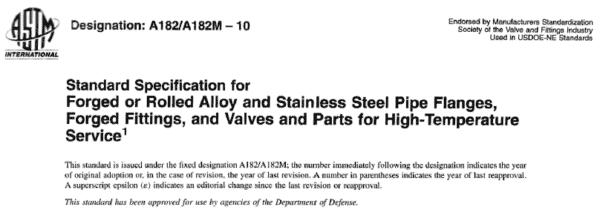
316H – UNS S31609
Similar in approach to 304H, grade 316H is a high carbon variant of regular grade 316 stainless steel, which contains a small percentage of molybdenum for use in marine grade applications.
This austenitic grade of stainless utilizes a higher carbon content for use in higher temperature service, much like its cousin grade 304H. Though it is less commonly used, it is still commercially available.
317/L – UNS S31700 / UNS S31703
An austenitic chromium grade containing molybdenum, and similar to grade 316, except with a higher value of stress resistance, increased tensile strength, higher service in elevated temperature, and general resistance to corrosion from chloride or sulfuric solutions. The low carbon option (L) can be selected for a more optimal socket weld flange requirement.
310/310S – UNS S31000 / UNS S31008
A stainless grade with excellent workability, utilized in heat exchanger applications and projects with elevated temperatures involving high salinity. This grade contains an increased chromium and nickel content and has elevated characteristics of oxidation and corrosion resistance when compared to more common stainless grades such as 304 and 309.
321/321H – UNS S32100 / UNS S32109
An austenitic grade stainless containing over 4 or 5 times the level of titanium as it does in carbon, with a maximum titanium value of 0.70%. This material has a high intergranular corrosion resistance and is well utilized in high heat applications in the aerospace industry such as aircraft jet engine manifolds and exhaust components.
347/347H – UNS S34700 / UNS S34709
A stainless flange grade containing a small percentage of columbium and tantalum for stabilization purposes. Commonly used in the combined high heat and corrosion environments of refineries, power generation, and airline service, this austenitic alloy retains better properties in corrosive environments compared to similar alloys 321 and 317.
CHROME
A corrosion resistant material category containing a minimal nickel content, and just enough chromium to reduce oxidation. Popular grades under the A182 spec include F11, F22, F5, and F9.
DUPLEX
Can’t decide between stainless and alloy? How about the best of both worlds? We offer a variety of duplex in both forged and plate forms including grades 2205, F51, F53, and F60.
Products
Texas Flange stocks a wide variety of flanges in all sizes and specifications.
ANSI Flanges
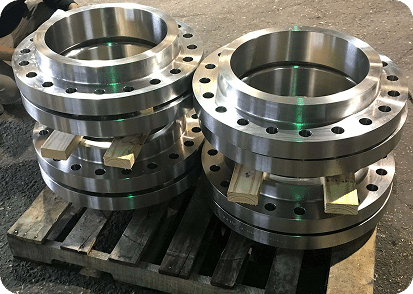
ASME Flanges
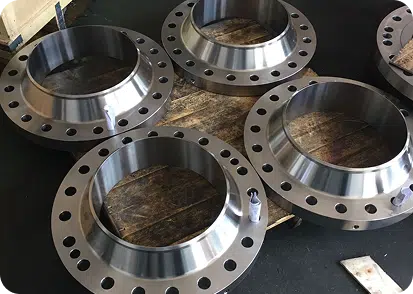
AWWA Flanges
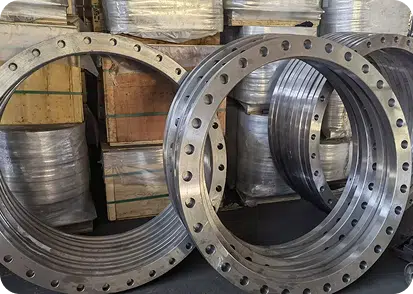
Pipe Flanges
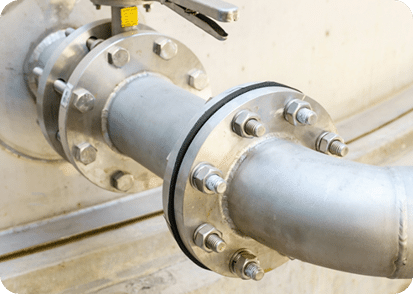
Industrial Flanges
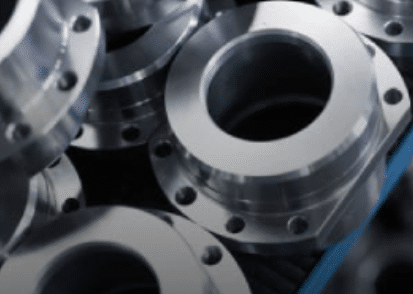
Oil & Gas Industry Flanges
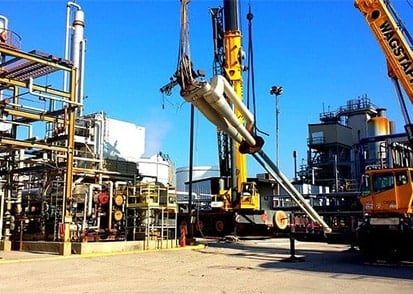
Custom Flanges
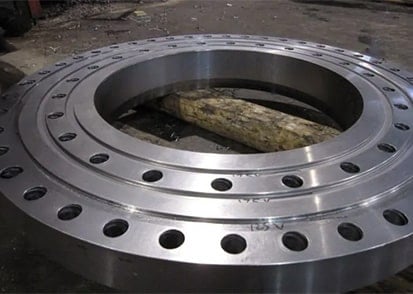
Petrochemical Flanges
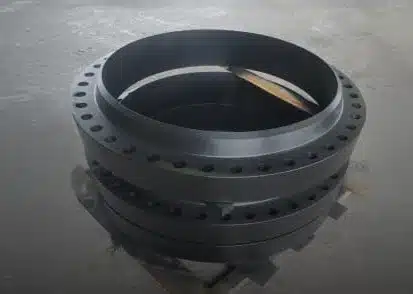
Texas Waterworks Flanges
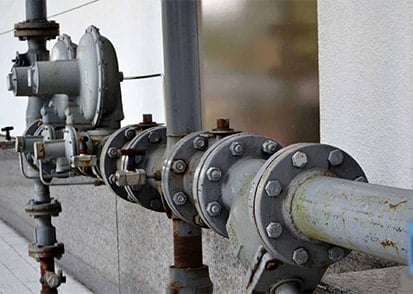
Ring Joint Flanges
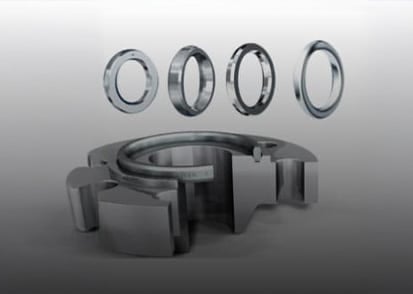
Large Industry Standard Flanges
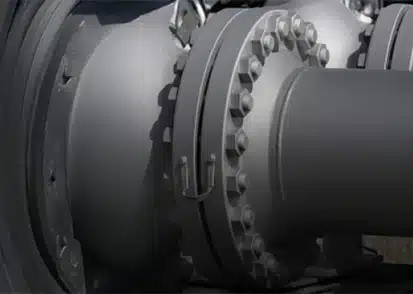
Metric System Flanges
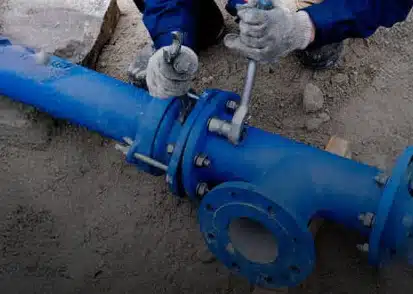
Plumbing And Mechanical Industries Flanges
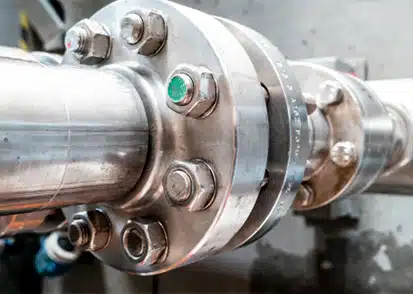
Industrial Pumps, Valves And Vessels
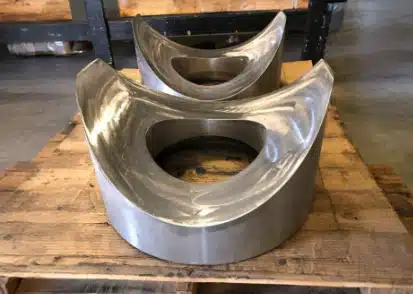
Manufacturing Industries Flanges
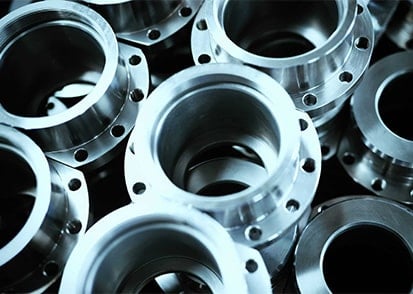
Heating Systems Industries Flanges
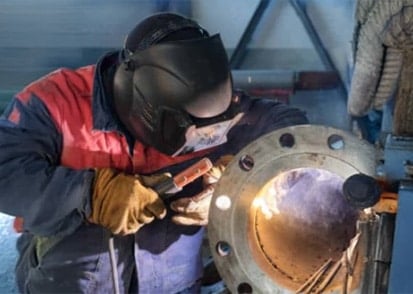
Flange Food And Beverage Industries Flanges
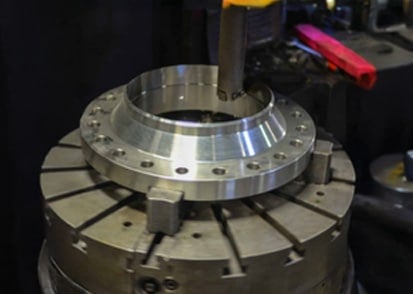
Versatility and Durability of Stainless Steel Flanges
Frequently Asked Questions (FAQs)
The three main types of flanges are weld neck, slip-on, and blind flanges.
A weld neck flange has a long tapered hub that provides structural integrity and resistance to high pressure, making it ideal for critical applications.
A slip-on flange slides over the pipe and is welded in place, offering easy installation and cost-effectiveness for low to medium-pressure applications.
A blind flange is a solid flange used to close off the end of a pipeline, preventing fluid flow in systems that may require future expansion or maintenance.
The standards for stainless steel flanges include ASME B16.5, which covers pipe flanges and flanged fittings for sizes ranging from ½ inch to 24 inches and pressure classes from Class 150 to Class 2500. ASME B16.47 governs large-diameter flanges in Series A and B for sizes above 24 inches.
Additionally, EN 1092-1 is the European standard for stainless steel flanges, and ISO 7005 provides international flange specifications. These standards define dimensions, pressure ratings, face types, and material requirements to ensure compatibility and performance across industries.