The Case for Lap Joint Flanges
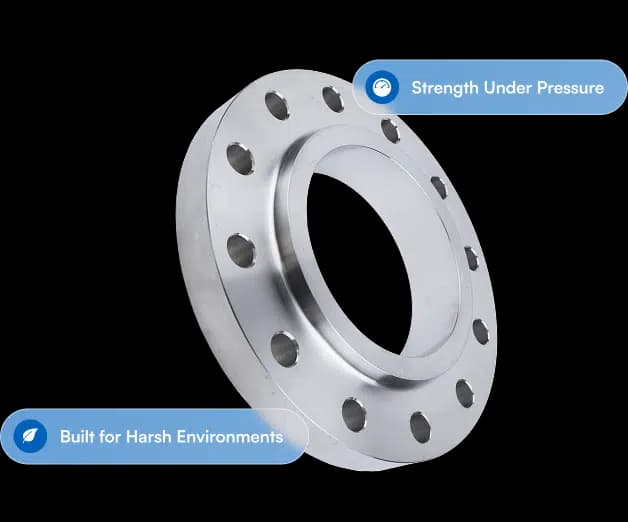
Lap joint flanges (also called loose flanges because they're not permanently welded to the pipe) are designed to slip over a stub end, a short length of pipe with a defined shoulder. The lap joint flange rotates freely around the stub end until it's positioned correctly, then it's bolted to the adjacent flange. Unlike weld neck flanges, which must be welded in precise alignment, lap joint flanges allow installation flexibility and are easier to align during assembly.
The primary advantage of lap joint flanges is assembly flexibility and maintenance accessibility. Because the flange can rotate around the stub end, technicians can position the bolt holes to align perfectly with the adjacent flange, then clamp the system tight. This eliminates the alignment headaches common with welded weld neck flanges. If the system needs to be disassembled for maintenance, the lap joint flange simply unbolt and slide off the stub end. Removing a welded weld neck flange, by contrast, requires either cutting it off or heating the piping system for seal-breaking.
Cost Savings Breakdown
The initial purchase price of lap joint flanges plus stub ends is typically lower than weld neck flanges for the same pressure class and size. A 2-inch, Class 300 weld neck flange might cost 25-30 dollars, while a 2-inch lap joint flange plus stub end costs 18-22 dollars for both components. This material cost advantage is real but modest. The significant savings come in installation and maintenance labor.
Installation labor: Weld neck flanges require a skilled welder to position and weld the flange to the pipe, a process taking 30+ minutes per weld including setup, heat treatment if required, and inspection. Lap joint flanges require only positioning and bolting, a 5-10 minute task per flange that any technician can perform. Over a project with dozens of flanges, this translates to hundreds of labor hours saved. Maintenance labor: When a lap joint flange needs to be removed, technicians unbolt it and it slides off. A weld neck flange must be cut or heated off, a time-consuming and sometimes destructive process. Over a 20-year facility lifespan with multiple maintenance cycles, the time and cost differences are substantial.
Best Applications
Lap joint flanges are ideal for systems that will require disassembly and reassembly during their operational life. Refineries, chemical plants, and processing facilities disassemble and inspect piping systems regularly. These industries benefit greatly from lap joint flanges because maintenance is faster and less invasive. Modular or portable equipment that will be moved or reconfigured also benefits from lap joint design.
Lap joint flanges are also appropriate where pipe alignment is difficult to achieve. Outdoor piping systems exposed to settling, temperature fluctuations, and vibration may have alignment challenges. Lap joint flanges accommodate these tolerances better than weld neck flanges because the flange can rotate to adjust bolt hole alignment. Systems with frequent vibration or thermal cycling where preventing stress concentration at the flange/pipe interface is desired also benefit from lap joint design.
Limitations to Know
Lap joint flanges are not appropriate for all applications. They cannot be used on critical high-pressure systems where the seal between flange and stub end is essential. The flange-to-stub-end connection is a slip fit with no welded connection, so the flange can separate if the bolted connection to the adjacent flange fails catastrophically. For critical high-pressure applications, the locked connection provided by a welded weld neck is more secure.
Lap joint flanges also cannot be used in certain service conditions. They're not appropriate for cryogenic service where the slip fit connection might leak as materials contract. They're not ideal for service with aggressive chemicals that might corrode the slip fit interface and cause sticking. Additionally, lap joint flanges have slightly less strength than equivalent weld neck flanges because the neck portion of a weld neck flange provides structural reinforcement. For oversized applications or unusual pressure/temperature combinations, the engineer might specify weld neck instead of lap joint.
Making the Switch
If you're considering switching from weld neck to lap joint flanges, start with a total cost of ownership analysis. Calculate your material cost savings and your projected installation and maintenance labor savings over the equipment lifespan. For most industrial applications with anticipated maintenance, lap joint flanges show positive ROI within 2-5 years. For facilities that have short operating lives or minimal maintenance plans, the ROI might not justify the change.
When implementing lap joint flanges, ensure your piping drawings clearly indicate lap joint with stub ends, not weld neck flanges. Train your installation and maintenance crews on proper lap joint installation and removal procedures. Verify that your fasteners and gaskets are appropriate for lap joint applications. Finally, keep spare stub ends in inventory since they're relatively inexpensive components that occasionally need replacement due to wear or corrosion.